
2026-02-09
487 reads
2026-02-09
487 reads

With SQL Server 2012 Microsoft introduced the AlwaysOn Availability Group feature, and since then many changes and improvements have been made. This article is an update to another article, and will cover the prerequisites and steps for installing AlwaysOn in your SQL Server 2019 environment. Prerequisites Before implementing your AlwaysOn Availability Group (AG), make sure […]
2025-12-24 (first published: 2025-11-25)
1,070 reads

Knowing the usage from all workloads is definitely better than focusing on only the primary or a single secondary. But what if I want to make more informed decisions, incorporating row counts, size, and index columns into this output?
2025-10-27
Spotting synchronization disconnects between a primary and a secondary data center in a distributed availability group configuration can be hard, so here are valuable tools to help you with it
2025-10-10
1,274 reads

Synchronous replicas in SQL Server Availability Groups promise no data loss, but they don’t promise zero delay; under heavy load they can still fall behind. This article shows how to measure and track that hidden replication delay using SQL Server performance counters, so you can see how well your system keeps up during IO‑intensive operations and plan maintenance more safely.
2025-09-17
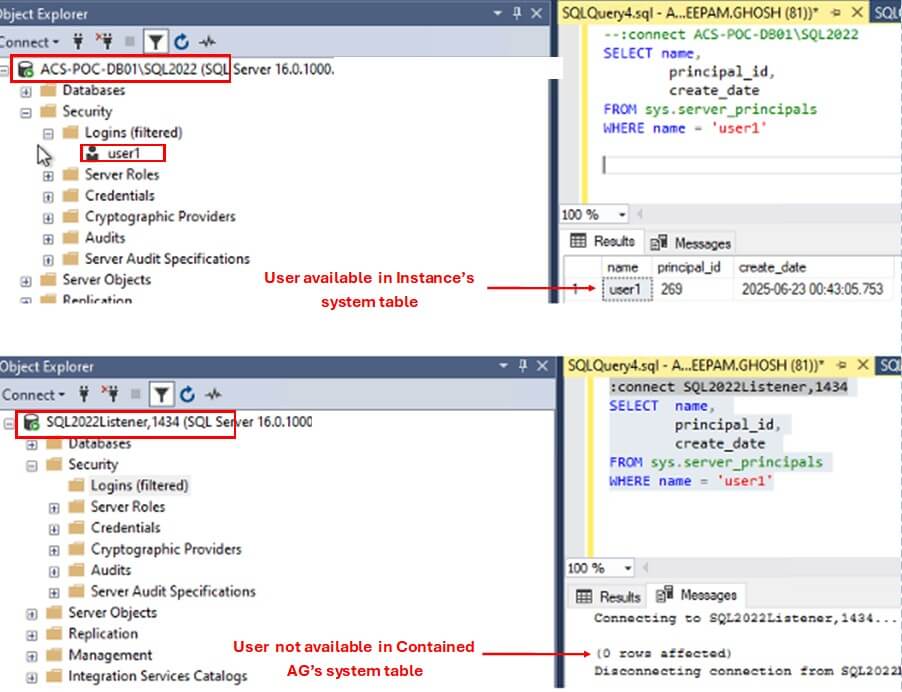
SQL Server 2022 introduced a new feature called Contained Availability Groups. It allows the Database Administrators to effectively manage the Server Level objects, such as Logins, SQL Agent jobs, etc. in an HA environment. In today's article, we will learn about this new feature of SQL Server. The Challenge of Managing Server Objects in Availability […]
2025-08-20
9,302 reads
A customer has a database that is already set up in a SQL Server Availability Group. Since this database hosts sensitive data, there is a need to encrypt the primary and all secondary replicas of the data. In this article, we will walk through how this can be done.
2025-08-13
This article describes the process to create a read-scale cross-platform SQL Server Availability Group where the primary is Linux and the secondary is Windows.
2025-07-23
370 reads
This article shows the final step of an availability group creation, specifically for a distributed clusterless one.
2025-07-14
4,523 reads
2025-05-05
448 reads
By James Serra
I’m honored to be hosting T-SQL Tuesday — edition #192. For those who may...
By Vinay Thakur
Continuing from Day 2 , we learned introduction on Generative AI and Agentic AI,...
Quite the title, so let me set the stage first. You have an Azure...
hi everyone I am not sure how to write the query that will produce...
Comments posted to this topic are about the item Rollback vs. Roll Forward
Comments posted to this topic are about the item Foreign Keys - Foes or...
I have some data in a table:
CREATE TABLE #test_data
(
    id INT PRIMARY KEY,
    name VARCHAR(100),
    birth_date DATE
);

-- Step 2: Insert rows
INSERT INTO #test_data
VALUES
(1, 'Olivia', '2025-01-05'),
(2, 'Emma', '2025-03-02'),
(3, 'Liam', '2025-11-15'),
(4, 'Noah', '2025-12-22');
If I run this query, how many rows are returned?
SELECT *
FROM OPENJSON(
     (
         SELECT t.* FROM #test_data AS t FOR JSON PATH
     )
             ) t;
See possible answers