
Your Favorite Improvement
This Friday Steve asks about what you're looking forward to in SQL Server 2025, if anything.
This Friday Steve asks about what you're looking forward to in SQL Server 2025, if anything.

While Recurrent Neural Networks (RNN) are powerful, they often struggle with long-term dependencies due to the vanishing gradient problem. Long Short-Term Memory Networks (LSTMs) address this issue by introducing memory cells and gates. For beginners, understanding LSTM components, such as the input, output, and forget gates, can be challenging. This tip breaks down LSTMs in an intuitive way, highlighting their importance and practical applications.
Asking for a raise is a scary event for many employees. Today Steve gives you a few things to think about and some advice on how to go about changing your job.
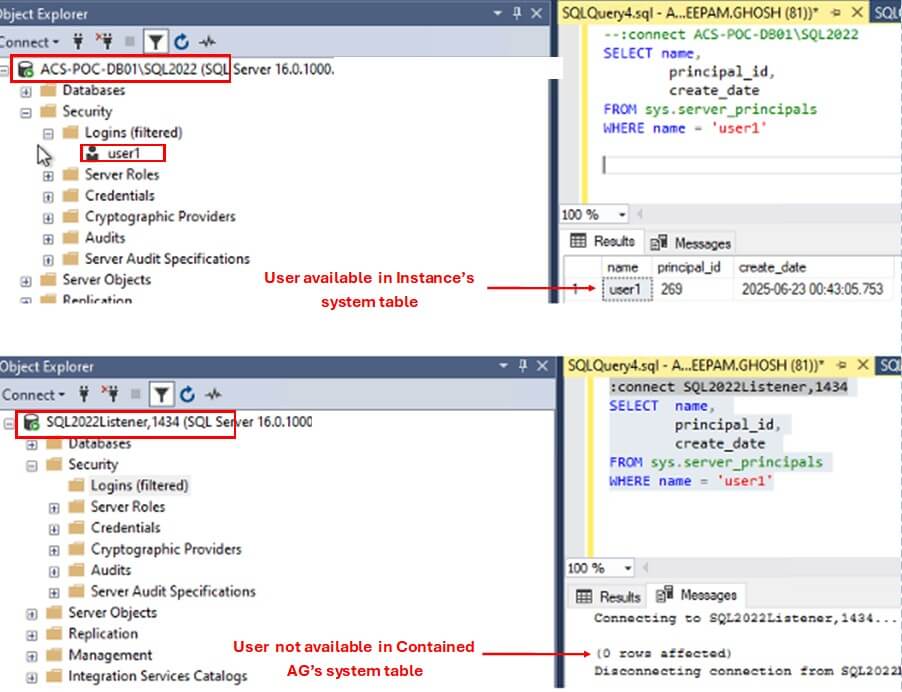
SQL Server 2022 introduced a new feature called Contained Availability Groups. It allows the Database Administrators to effectively manage the Server Level objects, such as Logins, SQL Agent jobs, etc. in an HA environment. In today's article, we will learn about this new feature of SQL Server. The Challenge of Managing Server Objects in Availability […]

When I first started with Power Query, it was in Excel, through the Power Pivot feature. I was amazed at how I could transform data with just a few clicks and quickly create PivotTables. Then, when Power Query appeared in Power BI, I began working with larger data sources and more complex projects.

Learn how to create a dynamic database dashboard that tracks key metrics using SQL Server Reporting Services. From setting up to deploying your report.
Is AI going to kill off a lot of data professional jobs? Steve doesn't think so, but judge for yourself.
SQL Server users have been asking for native regular expression support for over two decades. There are third-party Common Language Runtime (CLR) modules that offer this functionality, but these can be complicated to install and simply aren’t possible in some environments. I want to split a string using a regular expression instead of a static string. Will that be possible in SQL Server 2025, without CLR?

In my ongoing war against shadow AI, I’ve been testing out alternatives that most everyone can use, no matter what your technical expertise. Although somewhat limited depending on your resources available, (laptop CPU/GPU, memory, etc.) If you want to try the newest open models without sending your prompts to the cloud, or you just want […]
Introduction ChatGPT includes custom GPTs. You can create your own custom GPT. In this article, we will demonstrate how to create a custom GPT expert in SQL Server. Requirements To create your own GPT, you need to use the paid version of ChatGPT. First, go to ChatGPT. Secondly, if you don’t have the paid version, […]
By Brian Kelley
Do you have a case where you have a named instance you'd like to...
By Steve Jones
I was trolling the docs and noticed the SIGN() function. I have never written...
By ReviewMyDB
The T-SQL Tuesday #201 round-up: nine bloggers on whether temp tables are a friend...
Comments posted to this topic are about the item Admin Rights for Everyone
Comments posted to this topic are about the item Kerberos Authentication for Aurora PostgreSQL:...
Comments posted to this topic are about the item RegEx Functions I
Which of these RegEx functions need compatibility level 170 in SQL Server 2025?
See possible answers