
Leadership Lessons
Not for you, for me.
I’m sure you’ve heard the statement: Praise in public. Criticize in private.
I agree with this approach....
2016-03-18 (first published: 2016-03-14)
1,740 reads
Not for you, for me.
I’m sure you’ve heard the statement: Praise in public. Criticize in private.
I agree with this approach....
2016-03-18 (first published: 2016-03-14)
1,740 reads
This is one of those things that I found very interesting but figured I’d probably never really use. Of course...
2016-03-14
497 reads
In the Previous blogs we saw about SQL server logical tree and the various memory caches.
http://sqlandmorewithkruti.blogspot.in/2016/02/memory-fundamentals-for-sql-server-sql.html
In this blog we shall...
2016-03-14
4,961 reads
If you were to poll data professionals on which tasks they enjoy working on the most, ETL logging would probably...
2016-03-22 (first published: 2016-03-14)
2,405 reads
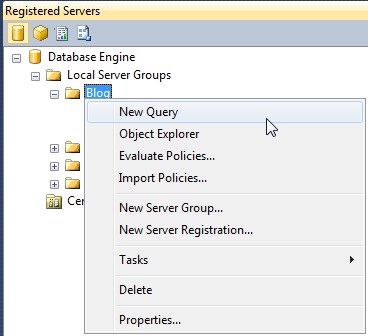
Setting up registered servers and practical uses of multiserver queries in SSMS.
2016-03-14
45 reads
You can run queries against multiple servers at once, and it’s quite useful for a number of reasons. I use...
2016-03-14
730 reads
I’ve been developing T-SQL for about 20 years now and almost since day one there has been functionality that , IMO,...
2016-03-13
630 reads
By Steve Bolton
…………In the last installment of this amateur series of self-tutorials, we saw how the Shapiro-Wilk Test might probably...
2016-03-12
858 reads
Yesterday Microsoft announced that they will now support SQL Server on Linux. They are targeting mid-2017, but you can download...
2016-03-11
77 reads
Yesterday Microsoft announced that they will now support SQL Server on Linux. They are targeting mid-2017, but you can download...
2016-03-11
2,385 reads
By James Serra
Microsoft shared a broad set of Fabric, Power BI, and SQL updates at FabCon...
By Steve Jones
No, I’m not quitting or retiring. Just going on vacation, but I leave tonight...
Comments posted to this topic are about the item Let's Talk Certifications, which is...
Comments posted to this topic are about the item The Hidden Security Risks of...
Comments posted to this topic are about the item The Empty Aggregate
I have this table in a SQL Server 2025 database:
CREATE TABLE [dbo].[CustomerOrder]
(
[OrderID] [int] NULL,
[CustomerID] [int] NULL,
[total] [money] NULL
) ON [PRIMARY]
GO
What is returned from this code? (answers are for the sum and then the count)
SELECT SUM(total) AS sum,
       COUNT(total) AS count
FROM dbo.CustomerOrder;
See possible answers