
T-SQL Tuesday #101: My Essential SQL Server Tools
This month’s T-SQL Tuesday topic comes from Jens Vestergaard (b|t) who is asking us about our essential SQL Server Tools.
I’ve...
2018-04-10
311 reads
This month’s T-SQL Tuesday topic comes from Jens Vestergaard (b|t) who is asking us about our essential SQL Server Tools.
I’ve...
2018-04-10
311 reads
This T-SQL Tuesday is brought to us by Jens Vestergaard (b | t), and we are asked to share our favorite...
2018-04-10
683 reads
This T-SQL Tuesday is brought to us by Jens Vestergaard (b | t), and we are asked to share our favorite...
2018-04-10
76 reads
This month’s T-SQL Tuesday is brought to you by Jens Vestergaard. The invitation for #101 is for essential SQL Server...
2018-04-10
1,562 reads
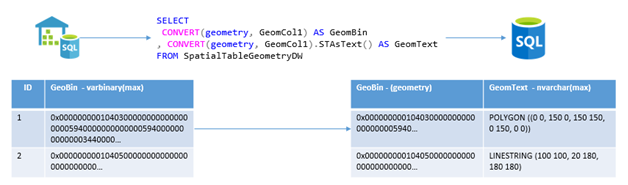
[read this post on Mr. Fox SQL blog] Recently we had a requirement to perform SQL Spatial functions on data that was stored in Azure SQL DW. Seems simple...
2018-04-10
19 reads
[read this post on Mr. Fox SQL blog]
Recently we had a requirement to perform SQL Spatial functions on data that...
2018-04-10
639 reads
# Not the GDPR News -t minus 10 days
There is ten days to go and there are still some seats left for...
2018-04-09
313 reads
I’ve been away a bit in the last week with personal and family commitments. As a result, I feel a...
2018-04-09
926 reads
We all go to great lengths to make sure that our databases are secure (or at least I really hope...
2018-04-09 (first published: 2018-04-04)
2,495 reads
If you are working on SQL Server optimization delicately, you may get often queries that how to find if any...
2018-04-09
977 reads
By James Serra
Microsoft shared a broad set of Fabric, Power BI, and SQL updates at FabCon...
By Steve Jones
No, I’m not quitting or retiring. Just going on vacation, but I leave tonight...
Comments posted to this topic are about the item Let's Talk Certifications, which is...
Comments posted to this topic are about the item The Hidden Security Risks of...
Comments posted to this topic are about the item The Empty Aggregate
I have this table in a SQL Server 2025 database:
CREATE TABLE [dbo].[CustomerOrder]
(
[OrderID] [int] NULL,
[CustomerID] [int] NULL,
[total] [money] NULL
) ON [PRIMARY]
GO
What is returned from this code? (answers are for the sum and then the count)
SELECT SUM(total) AS sum,
       COUNT(total) AS count
FROM dbo.CustomerOrder;
See possible answers