Tony Davis

  • Interests: football, modern literature, real ale

Tribal SQL eBook Download

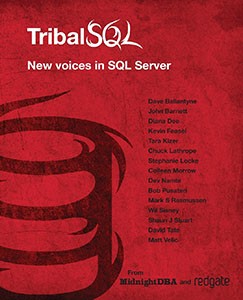
TribalSQL: 15 New Voices in SQL Server

MidnightDBA and Red Gate have joined together to produce a new book on SQL Server, written by 15 first-time authors. The resulting book, TribalSQL, includes everything you should know about SQL Server that isn’t taught in traditional training, they call it Tribal knowledge.

★ ★ ★ ★ ★ ★ ★ ★ ★ ★

You rated this post out of 5. Change rating

2013-09-19 (first published: )

463 reads

Technical Article

SQL Server Crib Sheet Compendium

As a developer, DBA or manager, you may not really want to know all about XML, replication or Reporting Services, but if your next project uses one or more of these technologies heavily then the best place to start is with the 'jungle roof' view of each topic that this Crib Sheet compendium provides.

2009-02-10

12,284 reads

Blogs

How to Clear the SSMS Cache (SSMS 21 and Later)

By

How to Clear the SSMS Cache (SSMS 21 and Later) Updated...

The flight recorder: Replaying what an AI agent did on my SQL Server

By

“What exactly did it do on my server?” is the first question a DBA...

Announcements from the Microsoft Fabric Community Conference — Barcelona 2026

By

Microsoft shared a broad set of Fabric, Power BI, and SQL updates at FabCon...

Read the latest Blogs

Forums

Let's Talk Certifications

By Grant Fritchey

Comments posted to this topic are about the item Let's Talk Certifications

The Hidden Security Risks of Role Combination in SSAS Tabular

By Pablo Echeverria

Comments posted to this topic are about the item The Hidden Security Risks of...

The Empty Aggregate

By Steve Jones - SSC Editor

Comments posted to this topic are about the item The Empty Aggregate

Visit the forum

Question of the Day

The Empty Aggregate

I have this table in a SQL Server 2025 database:

CREATE TABLE [dbo].[CustomerOrder]
(
[OrderID] [int] NULL,
[CustomerID] [int] NULL,
[total] [money] NULL
) ON [PRIMARY]
GO
What is returned from this code? (answers are for the sum and then the count)
SELECT SUM(total) AS sum,
       COUNT(total) AS count
FROM dbo.CustomerOrder;


See possible answers