Jonathan Kehayias


SQLServerCentral Article

Troubleshooting SQL Server: A Guide for the Accidental DBA

Three SQL Server MVPs, and stalwarts of the SQLServerCentral and MSDN community forums, provide fascinating insight into the most common SQL Server problems, why they occur, and how they can be diagnosed using tools such as Performance Monitor, Dynamic Management Views and server-side tracing. The focus is on practical solutions for removing root causes of these problems, rather than "papering over the cracks".

(5)

You rated this post out of 5. Change rating

2014-11-11

25,897 reads

SQLServerCentral Article

Tracking Database File AutoGrowth with Event Notifications

As discussed in my previous Getting Started with SQL Server Event Notifications article, SQL Server Event Notifications allow us to capture and handle events that occur inside the SQL Server database engine. Event Notifications execute for DDL Events and Trace Events and we can use to capture information about the event that fired, and automate […]

(16)

You rated this post out of 5. Change rating

2012-11-06

9,056 reads

SQLServerCentral Article

SQL Server 2012 Database Recovery Advisor: Simplified Point in Time Recovery

The aim of the new Database Recovery Advisor in SQL Server 2012 is to simplify the task of piecing together a recovery sequence from multiple backup files, comprising full, differential, and log backups. In this article, I'll demonstrate how the tool makes it easier to plan for, and perform, a point in time recovery from a series of backups, in order to recover data that may have been lost due to an application bug, or user error.

(13)

You rated this post out of 5. Change rating

2012-07-13

2,633 reads

SQLServerCentral Article

Simplified Restores with SQL Server 2012 Recovery Advisor

Occasionally, a DBA may need to restore a database from a multiple backup files that originated from multiple servers. This requirement might arise, for example, in a database-mirroring configuration, where backups may be from either of the servers.

(12)

You rated this post out of 5. Change rating

2012-06-27

2,949 reads

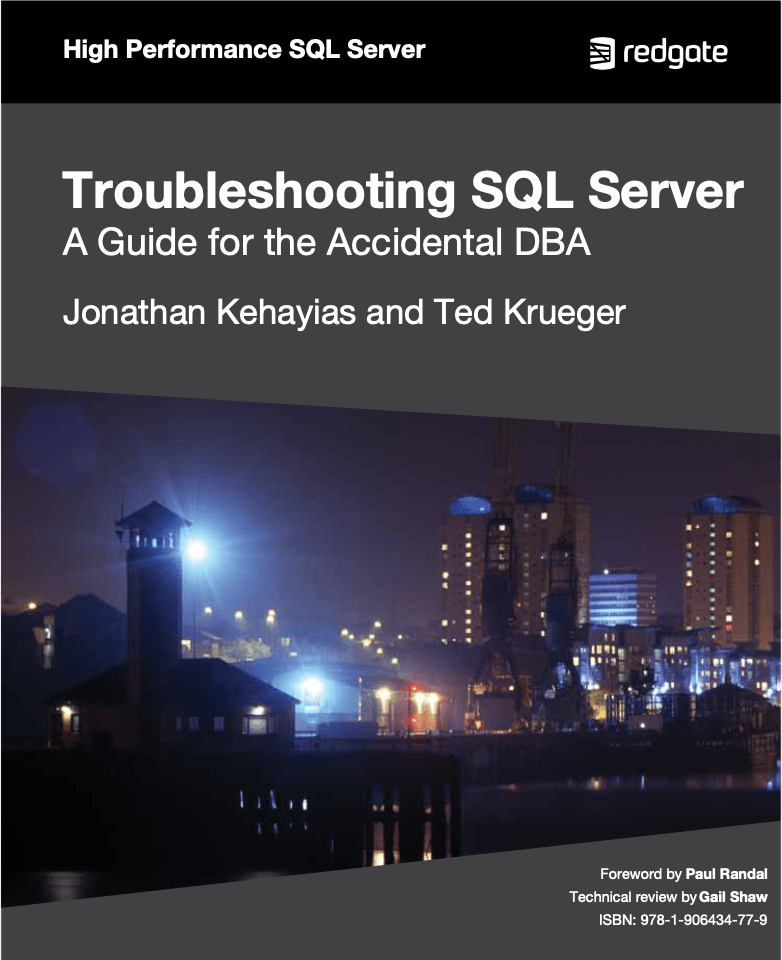
Troubleshooting SQL Server A Guide for the Accidental DBA eBook cover

Troubleshooting SQL Server: A Guide for the Accidental DBA

Three SQL Server MVPs, and stalwarts of the SQLServerCentral and MSDN community forums, provide fascinating insight into the most common SQL Server problems, why they occur, and how they can be diagnosed using tools such as Performance Monitor, Dynamic Management Views and server-side tracing. The focus is on practical solutions for removing root causes of these problems, rather than "papering over the cracks".

You rated this post out of 5. Change rating

2011-09-29

25,023 reads

Blogs

Getting Your Data GenAI-Ready: The Next Stage of Data Maturity

By

I remember a meeting where a client’s CEO leaned in and asked me, “So,...

Learn Better: Pause to Review More

By

If you want to learn better, pause more in your learning to intentionally review.

Azure SQL Managed Instance Next-Gen: Bring on the IOPS

By

If you’ve used Azure SQL Managed Instance General Purpose, you know the drill: to...

Read the latest Blogs

Forums

Azure SQL DBA certification

By ashrukpm

Hello team Can anyone share popular azure SQL DBA certification exam code? and your...

Faster Data Engineering with Python Notebooks: The Fabric Modern Data Platform

By John Miner

Comments posted to this topic are about the item Faster Data Engineering with Python...

Which Result II

By Steve Jones - SSC Editor

Comments posted to this topic are about the item Which Result II

Visit the forum

Question of the Day

Which Result II

I have this code in SQL Server 2022:

CREATE SCHEMA etl;
GO
CREATE TABLE etl.product
(
    ProductID INT,
    ProductName VARCHAR(100)
);
GO
INSERT etl.product
VALUES
(2, 'Bee AI Wearable');
GO
CREATE TABLE dbo.product
(
    ProductID INT,
    ProductName VARCHAR(100)
);
GO
INSERT dbo.product
VALUES
(1, 'Spiral College-ruled Notebook');
GO
CREATE OR ALTER PROCEDURE etl.GettheProduct
AS
BEGIN
    exec('SELECT ProductName FROM product;')
END;
GO
When I execute this code as a user whose default schema is dbo and has rights to the tables and proc, what is returned?

See possible answers