
Monday Morning SQL Break – March 14, 2016
It’s time for this week’s blog and twitter round-up for last week. If you haven’t already, follow me on twitter...
2016-03-14
457 reads
It’s time for this week’s blog and twitter round-up for last week. If you haven’t already, follow me on twitter...
2016-03-14
457 reads
Not for you, for me.
I’m sure you’ve heard the statement: Praise in public. Criticize in private.
I agree with this approach....
2016-03-18 (first published: 2016-03-14)
1,744 reads
This is one of those things that I found very interesting but figured I’d probably never really use. Of course...
2016-03-14
506 reads
In the Previous blogs we saw about SQL server logical tree and the various memory caches.
http://sqlandmorewithkruti.blogspot.in/2016/02/memory-fundamentals-for-sql-server-sql.html
In this blog we shall...
2016-03-14
4,983 reads
If you were to poll data professionals on which tasks they enjoy working on the most, ETL logging would probably...
2016-03-22 (first published: 2016-03-14)
2,409 reads
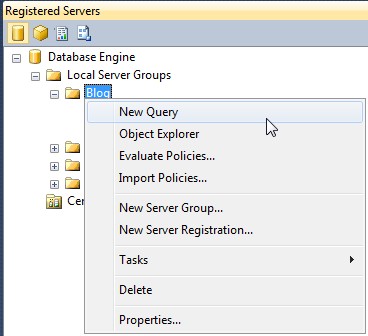
Setting up registered servers and practical uses of multiserver queries in SSMS.
2016-03-14
53 reads
You can run queries against multiple servers at once, and it’s quite useful for a number of reasons. I use...
2016-03-14
737 reads
I’ve been developing T-SQL for about 20 years now and almost since day one there has been functionality that , IMO,...
2016-03-13
642 reads
By Steve Bolton
…………In the last installment of this amateur series of self-tutorials, we saw how the Shapiro-Wilk Test might probably...
2016-03-12
869 reads
Yesterday Microsoft announced that they will now support SQL Server on Linux. They are targeting mid-2017, but you can download...
2016-03-11
82 reads
By Steve Jones
I was experimenting with CHOOSE() recently after I was asked a question. In a...
By DesertDBA
I did not expect 27 responses to my T-SQL Tuesday #204 invitation, but it...
Should you adopt an off-the-shelf AI tool, partner with a specialist, build in-house, or...
Has anyone ever seen this before? I have sysadmin permission on a server. I...
Comments posted to this topic are about the item Switching Schema II
Comments posted to this topic are about the item A Practical Approach to Automating...
I run this query:
SELECT
 s.name AS schemaname
 , o.name AS objectname
 FROM sys.objects o
 INNER JOIN sys.schemas s ON s.schema_id = o.schema_id
 WHERE o.name = 'Beer'
I get two rows back for the objects, named dbo.beer and etl.beer. Both the tables have identical schemas and are not partitioned. There are 25 rows in dbo.beer and 0 rows in etl.beer. I run this code:
ALTER TABLE dbo.beer switch TO etl.beerWhat happens? See possible answers