
TSQL Tuesday #100: A Look To The Future
So for this month’s TSQL Tuesday, Adam Mechanic has asked us to take a look into the future and think...
2018-03-13
455 reads
So for this month’s TSQL Tuesday, Adam Mechanic has asked us to take a look into the future and think...
2018-03-13
455 reads
The future, 100 months from now: It’s Monday, 6 July 2026. It’s been quite a week since SQL Server Update...
2018-03-13
302 reads
Intoduction to Stored Procedures in SQL Server
SQL Server uses Different types of stored procedures. They are the quickest method of accessing and manipulating database on the server. SPs are...
2018-03-13
19 reads
Intoduction to Stored Procedures in SQL Server
SQL Server uses Different types of stored procedures. They are the quickest method of...
2018-03-13
729 reads
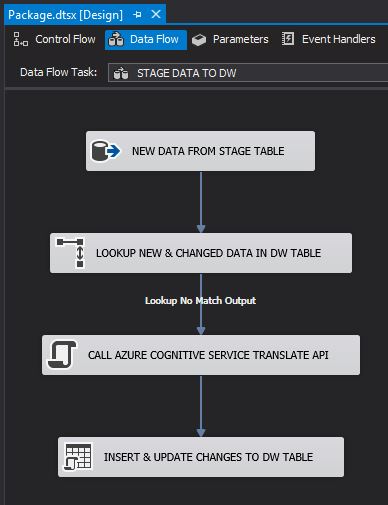
[read this post on Mr. Fox SQL blog] I had a recent requirement to integrate multi-language support into a SQL DW via a SQL SSIS ETL solution. Specifically the SQL DW...
2018-03-12
68 reads
[read this post on Mr. Fox SQL blog]
I had a recent requirement to integrate multi-language support into a SQL DW via...
2018-03-12
1,190 reads
I’ve been playing with Data Masker for SQL Server v6 and it’s an interesting product. I like the way it...
2018-03-12 (first published: 2018-03-02)
2,281 reads
I recently migrated an SSRS 2017 instance to a Power BI Report Server environment, as you can read in the...
2018-03-12
536 reads
What? Execution plans and the GDPR? Is this it? Have I completely lost it? Well, no, not on this topic,...
2018-03-12
845 reads
I’ve got a whole slew of free webcasts and events coming this spring. I’m excited about each and every one of them! My next event is a free session...
2018-03-12
13 reads
By Arun Sirpal
“What exactly did it do on my server?” is the first question a DBA...
By James Serra
Microsoft shared a broad set of Fabric, Power BI, and SQL updates at FabCon...
By Steve Jones
No, I’m not quitting or retiring. Just going on vacation, but I leave tonight...
Comments posted to this topic are about the item Let's Talk Certifications, which is...
Comments posted to this topic are about the item The Hidden Security Risks of...
Comments posted to this topic are about the item The Empty Aggregate
I have this table in a SQL Server 2025 database:
CREATE TABLE [dbo].[CustomerOrder]
(
[OrderID] [int] NULL,
[CustomerID] [int] NULL,
[total] [money] NULL
) ON [PRIMARY]
GO
What is returned from this code? (answers are for the sum and then the count)
SELECT SUM(total) AS sum,
       COUNT(total) AS count
FROM dbo.CustomerOrder;
See possible answers