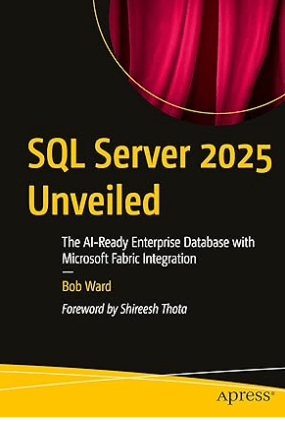
With built-in AI for application development and advanced analytics powered by Microsoft Fabric, SQL Server 2025 empowers you to innovate—securely and confidently. This book shows you how.
2026-10-16 (first published: 2025-11-10)
2,764 reads
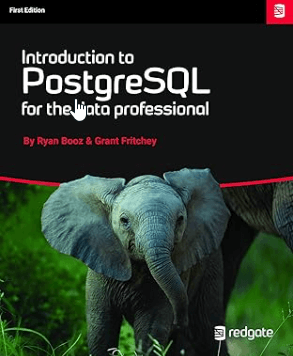
Adoption and use of PostgreSQL is growing all the time. From mom-and-pop shops to large enterprises, more data is being managed by PostgreSQL. In turn, this means that more data professionals need to learn PostgreSQL even when they have experience with other databases. While the documentation around PostgreSQL is detailed and technically rich, finding a simple, clear path to learning what it is, what it does, and how to use it can be challenging. This book seeks to help with that challenge.
- Printed book:
- Kindle book:
2026-10-14 (first published: 2025-02-06)
6,623 reads
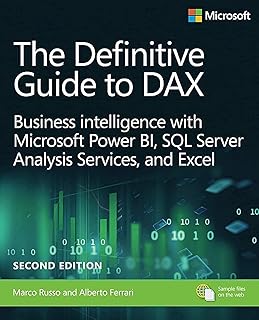
Now expanded and updated with modern best practices, this is the most complete guide to Microsoft’s DAX language for business intelligence, data modeling, and analytics. Expert Microsoft BI consultants Marco Russo and Alberto Ferrari help you master everything from table functions through advanced code and model optimization.
- Printed book:
- Kindle book:
2026-10-09 (first published: 2024-09-18)
5,716 reads
The book begins with the basics, explaining what low-code and no-code are and showing how to maximize efficiency in creating business applications for one's organization. Next, the book describes the Microsoft Power Platform's foundation, as well as all its components and services. Readers will begin with practical exercises right away, beginning with provisioning a Power Platform environment. Next, the book delves deeper into the Power Platform components such as Power Apps, Power Automate, Power BI, and Power Virtual Agents. Towards the end, the book explains practical exercises for each feature or service where you will gradually build a small business solution for a fictitious organization, Project Wizards, Inc.
- Printed book:
- Kindle book:
2026-10-05 (first published: 2023-10-18)
2,990 reads
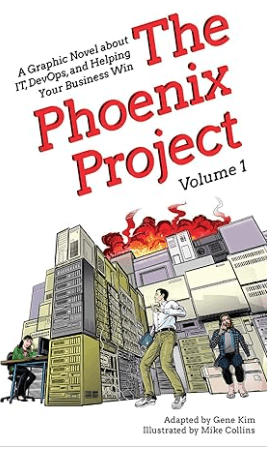
Adapted from the acclaimed bestselling book, The Phoenix Project Graphic Novel Volume 1 introduces readers to a stalwart cast of characters as they are challenged by the four types of work that impact complex workflows.
2026-10-02 (first published: 2024-12-05)
3,646 reads
Use this practical guide to analyze and troubleshoot SQL Server performance using wait statistics. You'll learn to identify precisely why your queries are running slowly. And you'll know how to measure the amount of time consumed by each bottleneck so you can focus attention on making the largest improvements first. This edition is updated to cover analysis of wait statistics current with SQL Server 2022. Whether you are new to wait statistics, or already familiar with them, this book provides a deeper understanding on how wait statistics are generated and what they mean for your SQL Server instance’s performance.
- Printed book:
- Kindle book:
2026-09-21 (first published: 2023-08-18)
12,655 reads
For anyone else who needs to write queries or develop T-SQL code for SQL Server, Azure SQL Database, or Azure SQL Managed Instance
- Printed book:
- Kindle book:
2026-09-18 (first published: 2025-10-14)
4,630 reads
Refactoring has proven its value in a wide range of development projects–helping software professionals improve system designs, maintainability, extensibility, and performance.
- Printed book:
- Kindle book:
2026-09-04 (first published: 2024-09-18)
7,547 reads
This book is your comprehensive guide to building robust Generative AI solutions using the Databricks Data Intelligence Platform. Databricks is the fastest-growing data platform offering unified analytics and AI capabilities within a single governance framework, enabling organizations to streamline their data processing workflows, from ingestion to visualization. Additionally, Databricks provides features to train a high-quality large language model (LLM), whether you are looking for Retrieval-Augmented Generation (RAG) or fine-tuning.
- Printed book:
- Kindle book:
2026-09-02 (first published: 2026-02-03)
2,655 reads
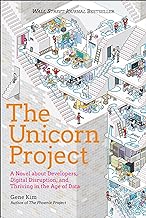
In The Unicorn Project, we follow Maxine, a senior lead developer and architect, as she is exiled to the Phoenix Project, to the horror of her friends and colleagues, as punishment for contributing to a payroll outage. She tries to survive in what feels like a heartless and uncaring bureaucracy and to work within a system where no one can get anything done without endless committees, paperwork, and approvals.
- Printed book:
- Kindle book:
2026-08-28 (first published: 2024-06-26)
4,681 reads