Shivayan Mukherjee

A professional software developer having more than 11yrs of industry experience in Java, SQL, microservices across multiple domains such as insurance, airlines, telecom, healthcare.
  • Interests: coding, travelling, outdoor games

SQLServerCentral Article

PostgreSQL WHERE, ORDER BY, and GROUP BY Clauses

Overview A database clause is a conditional statement used to filter data from the database. There are various database clauses available in PostgreSQL, like Where, Order By, Group By, Having, Distinct, Limit, Fetch. In this first chapter of the tutorial we will cover Where, Order By, Group By clauses with suitable example. WHERE Clause The […]

(2)

You rated this post out of 5. Change rating

2021-03-11

34,645 reads

SQLServerCentral Article

PostgreSQL Python Integration

Overview PostgreSQL is a free and general purpose open source object-relational database system that uses and extends the SQL language and Python is a high level, interpreted general purpose language. This article covers basic integration of Python with PostgreSQL apparently how we can establish connection with PostgreSQL database using Python program and perform CRUD operations on […]

(1)

You rated this post out of 5. Change rating

2021-02-01

6,474 reads

SQLServerCentral Article

PostgreSQL DML Statements

DML, or Data Manipulation Language, statements are used to manipulate the data present in a database. The most important DML statements are INSERT, UPDATE & DELETE. This tutorial covers the various PostgreSQL DML statements and how we can use them with SQL shell as well as pgAdmin. Assuming you are familiar with table creation in PostgreSQL, […]

(3)

You rated this post out of 5. Change rating

2021-01-07

8,082 reads

SQLServerCentral Article

A Getting Started PostgreSQL Tutorial

Introduction to PostgreSQL PostgreSQL is a free and general purpose open source object-relational database system that uses and extends the SQL language. Though originally designed to run on UNIX platforms, PostgreSQL is eligible to run on various platforms such as Linux, macOS, Solaris, and Windows. PostgreSQL databases provide enterprise-class database solutions and are used by […]

(5)

You rated this post out of 5. Change rating

2020-09-28

6,665 reads

JDBC-Connection

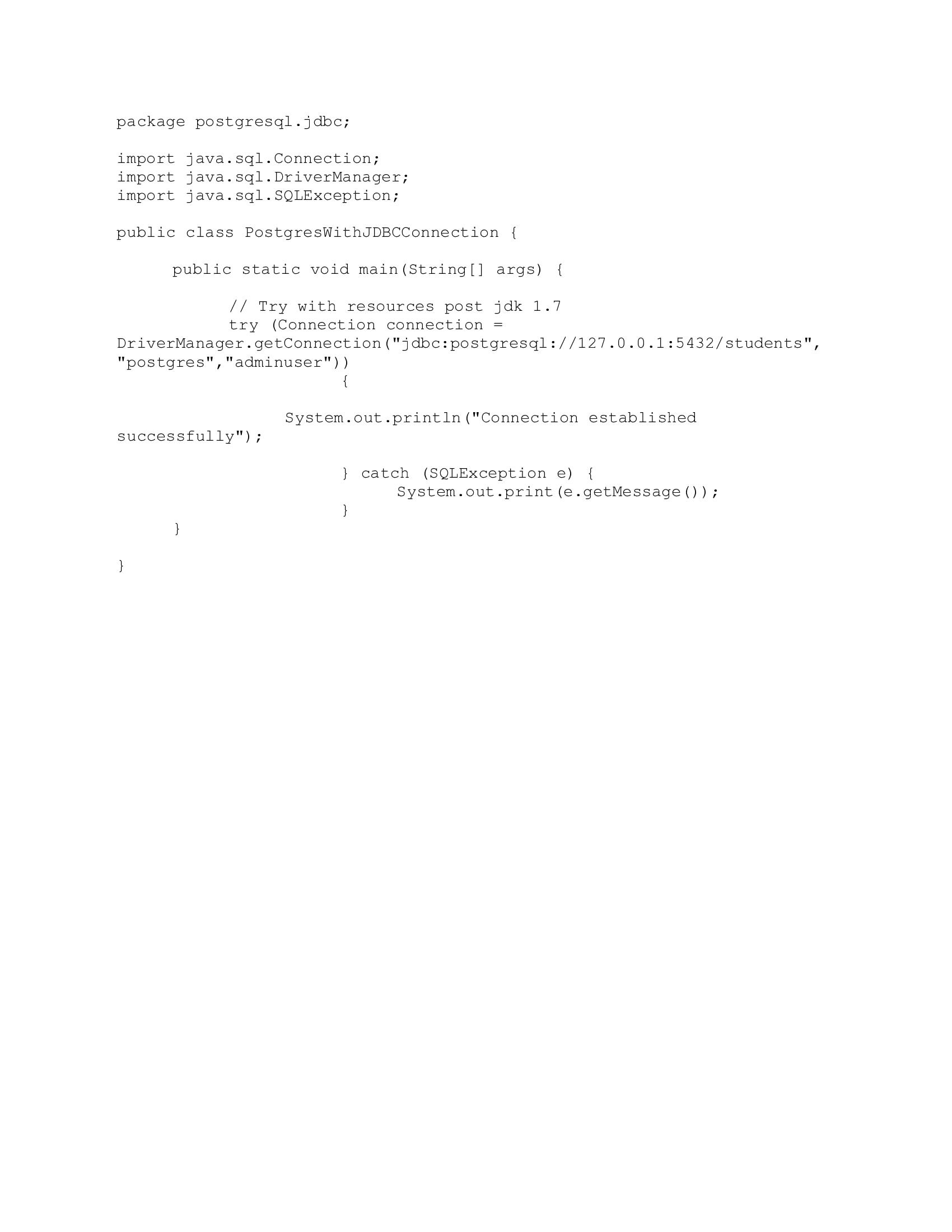
Postgresql JDBC Tutorial on Linux

PosgtreSQL is a free and general purpose open source object-relational database system that uses and extends the SQL language. Though originally designed to run on UNIX platforms, Postgres is able to run on various platforms, such as macOS, Solaris, Windows, Unix, and Linux. PostgreSQL databases provide enterprise-class database solutions and are used by a wide […]

(2)

You rated this post out of 5. Change rating

2020-05-11

9,806 reads

Blogs

AI: Blog a Day – Day 4: Transformers – Encoder, Decoder, and Attention

By

Continuing from Day 3 where we covered LLM models open/closed and their parameters, Today...

Flyway Tips: Multiple Projects

By

One of the nice things about Flyway Desktop is that it helps you manage...

What DevOps Look Like in Microsoft Fabric

By

Microsoft Fabric (not to be confused with the more general term “fabric” in DevOps)...

Read the latest Blogs

Forums

Can an Azure App Service Managed Identity be used for SQL Login?

By jasona.work

I'm fairly certain I know the answer to this from digging into it yesterday,...

Azure Synapse database refresh

By Sreevathsa Mandli

Hi Team, I am trying to refresh the Azure Synapse Dedicated pool from production...

how to write this query?

By water490

hi everyone I am not sure how to write the query that will produce...

Visit the forum

Question of the Day

Fun with JSON I

I have some data in a table:

CREATE TABLE #test_data
(
    id INT PRIMARY KEY,
    name VARCHAR(100),
    birth_date DATE
);

-- Step 2: Insert rows  
INSERT INTO #test_data
VALUES
(1, 'Olivia', '2025-01-05'),
(2, 'Emma', '2025-03-02'),
(3, 'Liam', '2025-11-15'),
(4, 'Noah', '2025-12-22');
If I run this query, how many rows are returned?
SELECT *
FROM OPENJSON(
     (
         SELECT t.* FROM #test_data AS t FOR JSON PATH
     )
             ) t;

See possible answers