Cláudio Silva

I work as Data Platform Architect.
I love performance tuning and I'm also a PowerShell lover who automates any process that needs to be done more than a couple of times.
I contribute to open-source PowerShell modules such as dbatools and dbachecks.

SQLServerCentral Article

Generate Role Member Reports using dbatools and the ImportExcel PowerShell modules

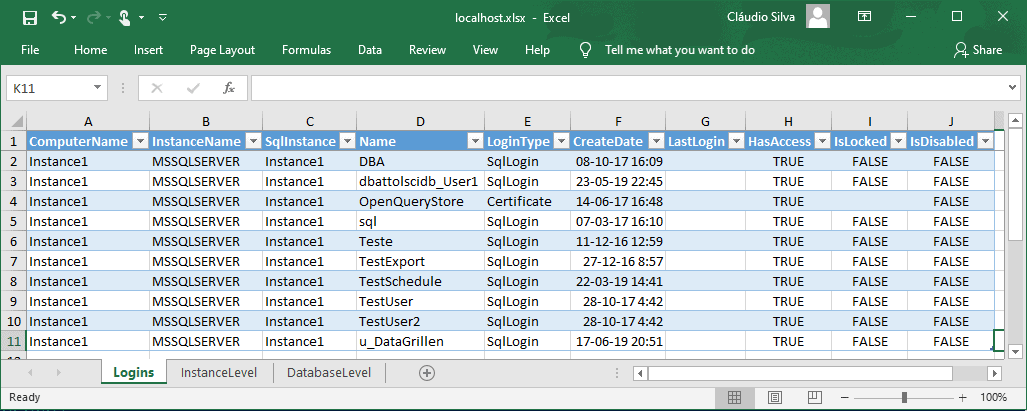
Being able to get information and save it on a Excel as a report can be a common and tedious task. What if we could join dbatools and ImportExcel PorwerShell modules to accomplish this in a easier and fast way? We will see how to export roles and its' member and save that info on a multi spreadsheet Excel file with handy tables ready to be explored.

(2)

You rated this post out of 5. Change rating

2020-06-30

7,001 reads

Blog Post

TSQL Tuesday

This month’s (#127) T-SQL Tuesday is brought by Kenneth Fisher (B | T) and he asked about Non SQL Tips and tricks. As a Windows user I know there...

2020-06-09

9 reads

Blogs

A New Word: on tenderhooks

By

on tenderhooks – adj. feeling the primal satisfaction of being needed by someone, which...

Ramblings about data communities and your contributions, no excuses

By

I have been active in the data community throughout my career. I have met...

SQL Server Journey till 2025 (brief)

By

Quick Summary for Microsoft SQL Server till 2025, I am fortunate to be part...

Read the latest Blogs

Forums

Simulating Mercury’s Orbital Motion Using Pure T-SQL (NASA 2025 Dataset)

By NKTgLaw

SQL Server is typically viewed as a transactional or analytical database engine. However, it...

Azure SQL Database | CREATE EVENT SESSION [Blocking_Capture] ON DATABASE

By DanielP

Hello, Is there a way in Azure SQL Database to change the 'Blocking Process...

Having a Little Fun at SQL Server Central

By Steve Jones - SSC Editor

Comments posted to this topic are about the item Having a Little Fun at...

Visit the forum

Question of the Day

String Similarity I

On SQL Server 2025, when I run this, what is returned?

SELECT EDIT_DISTANCE_SIMILARITY('SQL Server', 'MySQL')

See possible answers