
Removing ad hoc plans from Query Store
This is not a post about the “optimize for ad hoc workloads” setting on your favorite SQL Server instance, but that is a good place to start. Lots of...
2020-02-27 (first published: 2020-02-20)
438 reads
This is not a post about the “optimize for ad hoc workloads” setting on your favorite SQL Server instance, but that is a good place to start. Lots of...
2020-02-27 (first published: 2020-02-20)
438 reads
DBA, a job, a vital job. T-SQL a language that is fun. Select, a query to get some data. From, ... Continue reading
2020-02-26
25 reads
The SQLBits conference is taking place in London again this year, between March 31st and April 4th, and I’ll be there. I will not be presenting this year, but...
2020-02-26
10 reads
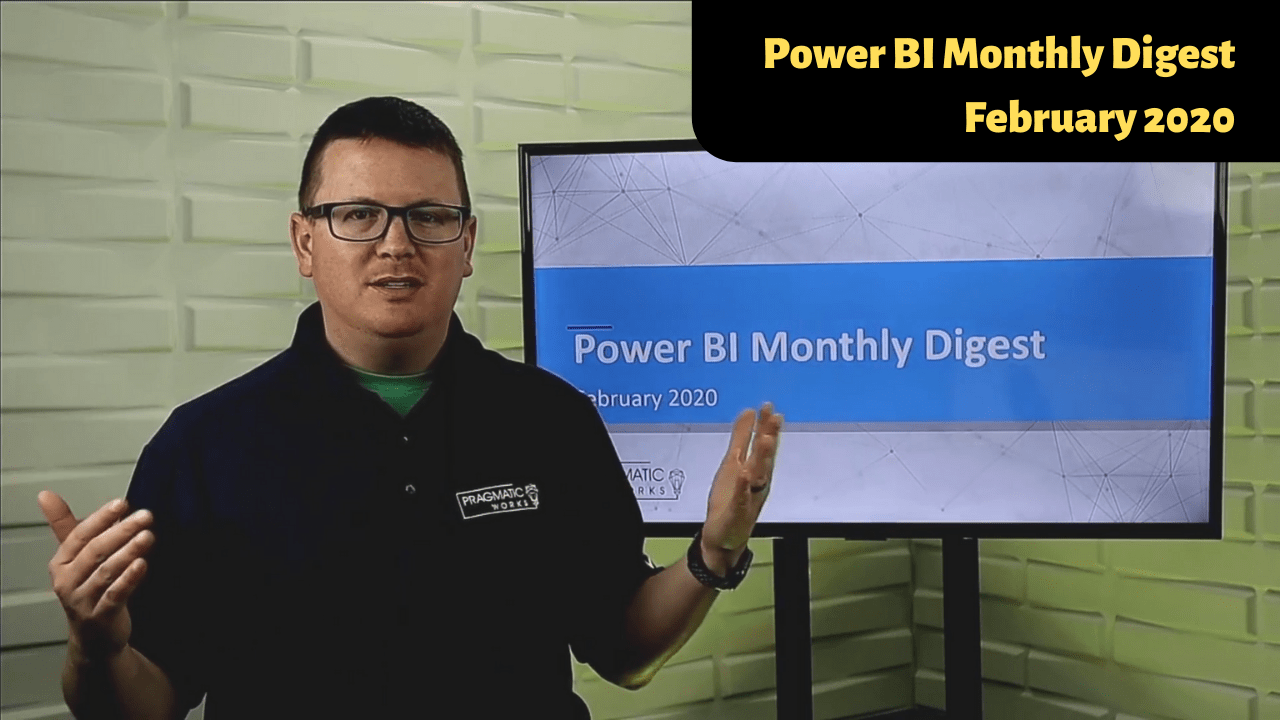
In this month’s Power BI Digest Manuel I will again guide you through some of the latest and greatest Power BI updates this month. In
2020-02-26 (first published: 2020-02-18)
420 reads
TEST Intro
I've been trying to improve modularization with Terraform.
Using Terraform Cloud, you get a private module repository.
The modules are linked to tags in git.
I've wanted additionally to specifically create...
2020-02-26
15 reads

I decided to write this off the back of a conversation I was having the other day around the SOS_SCHEDULER_YIELD wait type. The conversation went something along the lines...
2020-02-26
135 reads
I realized in my last #PowershellBasics post that I was talking about running a file and passing in an optional ... Continue reading
2020-02-25 (first published: 2020-02-17)
552 reads
dbatools has a lot of functions. A lot. Over 550. There is a great command index on the website, and the documentation gets updated every time a new version...
2020-02-25
14 reads
Great news! I was accepted this weekend to speak at SQLSaturday Los Angeles! This officially counts as a level up for me for my deadlock resolution quest. The event...
2020-02-25
17 reads
I recently received the news that I’ve been renewed as a Friend of Red Gate. I’ve been a big fan of Red Gate since the days when SQL Compare...
2020-02-25
17 reads
With Fabric Mirroring, Microsoft is promoting a nice and appealing story for operational reporting...
If you’ve been watching AI roll through the data community and thinking, “this seems...
By Arun Sirpal
Not every production incident is a database in RECOVERY_PENDING or a corrupted event (like...
Comments posted to this topic are about the item SQL Art, Part 4: Happy...
Hi All I am trying to find 'bad' characters that users might type in....
Comments posted to this topic are about the item Extreme DAX: Take your Power...
I set up a few users on my SQL Server 2022 instance.
CREATE LOGIN User1 WITH PASSWORD = 'Demo12#1'
CREATE USER User1 FOR LOGIN User1
GO
CREATE LOGIN User2 WITH PASSWORD = 'Demo12#2'
CREATE USER User2 FOR LOGIN User2
GO
CREATE LOGIN User3 WITH PASSWORD = 'Demo12#3'
CREATE USER User3 FOR LOGIN User3
GO
I then created a schema that one of them owned. Under this schema, I added a table with some data.
CREATE SCHEMA MySchema AUTHORIZATION User1
GO
CREATE TABLE Myschema.MyTable(myid INT)
GO
INSERT MySchema.MyTable
(
    myid
)
VALUES
(1), (2), (3)
GO
SELECT * FROM MySchema.MyTable
GO
I granted rights and verified that User2 could access this table.
GRANT SELECT ON Myschema.MyTable TO User2
GO
SETUSER 'USER2'
GO
SELECT * FROM MySchema.MyTable
GO
This worked. Now, I move this schema to a new user.
ALTER AUTHORIZATION ON SCHEMA::Myschema TO User3;
GO
What happens with this code?
SETUSER 'USER2'
GO
SELECT * FROM MySchema.MyTable
GO
See possible answers