
Letter To My Father
We spread my Fathers ashes over the past weekend. It was one of the hardest things...
2019-09-06 (first published: 2019-08-22)
527 reads
We spread my Fathers ashes over the past weekend. It was one of the hardest things...
2019-09-06 (first published: 2019-08-22)
527 reads

Some 2019 tips for other SQLSat organizers from my last year as lead organizer of SQLSatBR. I hope as a fellow organizer, you can pull some ideas and inspiration...
2019-09-06 (first published: 2019-08-21)
368 reads
One of the powerful aspects of Query Store is the ability to directly query the DMVs for details of historical executions and performance. A key view for this is...
2019-09-04 (first published: 2019-08-21)
320 reads
Based on the great post and script from Wayne Sheffield I decided to try again pre-printing the SpeedPASS for everyone this year. I dislike the line of shame and...
2019-09-05 (first published: 2019-08-21)
236 reads
An exciting new feature in SQL Server 2019 is Accelerated Database Recovery (ADR). Resulting from a combination of magic beans and smart software developers (I might be wrong about...
2019-08-21
57 reads
In a previous post, I explained how to get Jenkins running in a container for your local CI work. In this one, I’ll expand on the process for database...
2019-08-30 (first published: 2019-08-21)
534 reads
I have an all day seminar I give called “DevOps for the DBA”. If you’re attending, thinking of attending, or you have attended, you might want to have the...
2019-08-21
48 reads
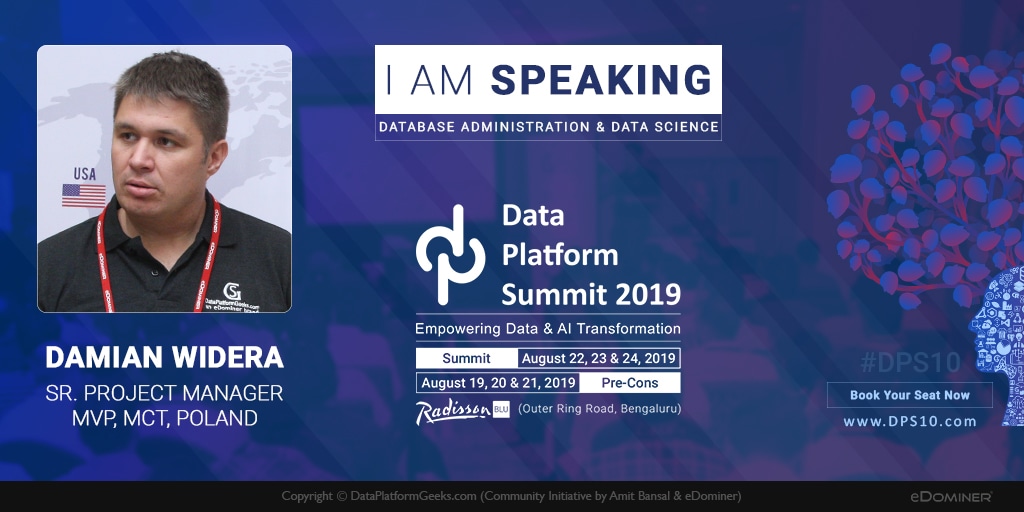
I have delivered a preconf on the biggest conference in Asia. The preconf was about Supervised and Unsupervised Machine Learning with bonus track about Semi-supervised solutions. This was really...
2019-08-21
14 reads
The summary from my fourth T-SQL Tuesday hosting for #117. This time I was scrambling a bit, but since I’ve worked with a few customers in the last year...
2019-08-20
30 reads
When you run an application using spark-dotnet, to launch the application you need to use spark-submit to start a java virtual machine which starts the spark-dotnet driver which then...
2019-08-20
17 reads
By SQLPals
How to Clear the SSMS Cache (SSMS 21 and Later) Updated...
By Arun Sirpal
“What exactly did it do on my server?” is the first question a DBA...
By James Serra
Microsoft shared a broad set of Fabric, Power BI, and SQL updates at FabCon...
Comments posted to this topic are about the item Let's Talk Certifications
Comments posted to this topic are about the item The Hidden Security Risks of...
Comments posted to this topic are about the item The Empty Aggregate
I have this table in a SQL Server 2025 database:
CREATE TABLE [dbo].[CustomerOrder]
(
[OrderID] [int] NULL,
[CustomerID] [int] NULL,
[total] [money] NULL
) ON [PRIMARY]
GO
What is returned from this code? (answers are for the sum and then the count)
SELECT SUM(total) AS sum,
       COUNT(total) AS count
FROM dbo.CustomerOrder;
See possible answers