
Changing a Drive Letter with PowerShell
Here is a short but sweet post on how to change the drive letter of a partition. Despite using my best Google skills I couldn’t find an example that...
2021-06-07 (first published: 2021-05-21)
365 reads
Here is a short but sweet post on how to change the drive letter of a partition. Despite using my best Google skills I couldn’t find an example that...
2021-06-07 (first published: 2021-05-21)
365 reads
I started to add a daily coping tip to the SQLServerCentral newsletter and to the Community Circle, which is helping me deal with the issues in the world. I’m...
2021-06-07
18 reads
You can create foreign keys using TSQL roughly the same way as you created primary keys. You can either use the ALTER TABLE statement to add the foreign key,...
2021-06-07 (first published: 2021-05-24)
432 reads
Let’s talk about your development environment. Specifically, I’d like to chat with you about the virtual space where your data architecture team, software developers, and information curators do their...
2021-06-07
10 reads
Let’s talk about your development environment. Specifically, I’d like to chat with you about the virtual space where your data architecture team, software developers, and information curators do their...
2021-06-07
27 reads
I will be delivering a lightning talk at DataMinutes on June 7th on this topic. I thought it would help to write a synopsis of what am going to...
2021-06-06
50 reads
Auditing, monitoring and alerting are security & performance tools that track activities inside a database and generates log events and alerts when a predefined event(more...)
2021-06-05
13 reads
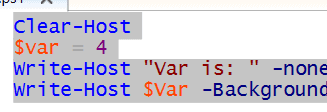
Writing to the screen is a really basic debugging technique. That said, since I’m really new with Powershell this is ... Continue reading
2021-06-04 (first published: 2021-05-20)
624 reads
Database backup and restore strategy is vital in preserving data for disaster recovery, compliance or fixing human error. In a business critical application, data need(more...)
2021-06-04
11 reads
Another post for me that is simple and hopefully serves as an example for people trying to get blogging as #SQLNewBloggers. I ran into someone trying to do some...
2021-06-04 (first published: 2021-05-19)
367 reads
By Steve Jones
It’s Prime Day. A few of my recommendations, since I want to do some...
With Fabric Mirroring, Microsoft is promoting a nice and appealing story for operational reporting...
If you’ve been watching AI roll through the data community and thinking, “this seems...
Comments posted to this topic are about the item SQL Art, Part 4: Happy...
Hi All I am trying to find 'bad' characters that users might type in....
Comments posted to this topic are about the item Extreme DAX: Take your Power...
I set up a few users on my SQL Server 2022 instance.
CREATE LOGIN User1 WITH PASSWORD = 'Demo12#1'
CREATE USER User1 FOR LOGIN User1
GO
CREATE LOGIN User2 WITH PASSWORD = 'Demo12#2'
CREATE USER User2 FOR LOGIN User2
GO
CREATE LOGIN User3 WITH PASSWORD = 'Demo12#3'
CREATE USER User3 FOR LOGIN User3
GO
I then created a schema that one of them owned. Under this schema, I added a table with some data.
CREATE SCHEMA MySchema AUTHORIZATION User1
GO
CREATE TABLE Myschema.MyTable(myid INT)
GO
INSERT MySchema.MyTable
(
    myid
)
VALUES
(1), (2), (3)
GO
SELECT * FROM MySchema.MyTable
GO
I granted rights and verified that User2 could access this table.
GRANT SELECT ON Myschema.MyTable TO User2
GO
SETUSER 'USER2'
GO
SELECT * FROM MySchema.MyTable
GO
This worked. Now, I move this schema to a new user.
ALTER AUTHORIZATION ON SCHEMA::Myschema TO User3;
GO
What happens with this code?
SETUSER 'USER2'
GO
SELECT * FROM MySchema.MyTable
GO
See possible answers