

I’m really excited about some growth in Flyway support. I’ve been asking about this for some time and we now have Databricks and Snowflake support.
I’ve been working with Flyway and Flyway Desktop and helping customers improve their database development. This series looks at some tips I’ve gotten along the way.
Analytic Platforms
There has been tremendous growth in the usage, and the capabilities of many major analytics platforms. A few years ago Snowflake was the dominant platform, but Databricks has grown quite a bit. I still don’t see a ton of Fabric usage (outside of PowerBI), but it’s on our radar.
I wanted to note that both Snowflake and Databricks advannced capabilities in Flyway have moved to General Availability (GA). Both capabilities were developed quickly, with the help of AI. We knew what we wanted, we’d designed this, and our engineers were porting over functionality we knew how to build, guiding AI to get the work done quicker than humans typing.
Both of those platforms help with managing notebooks in a software development lifecycle, but they don’t do much for schema changes. Esp if you don’t want a desired state configuration, which can be complex to manage in a team world.
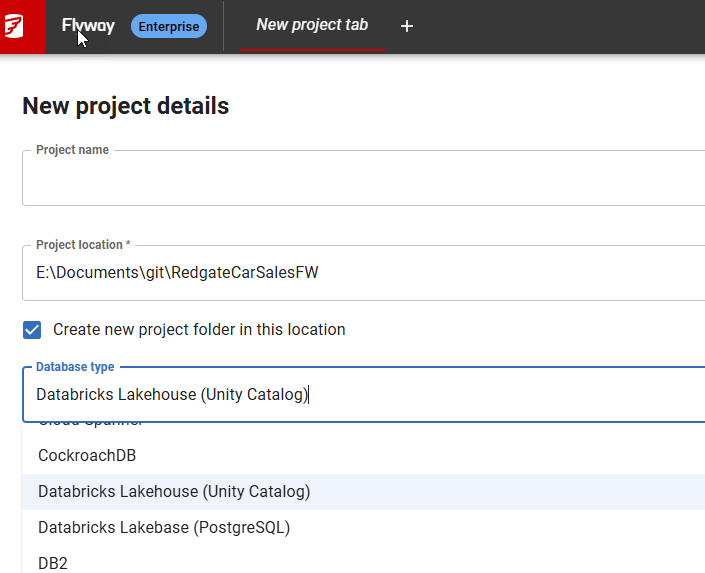
When I create a new project, I have options for Databricks:
and Snowflake
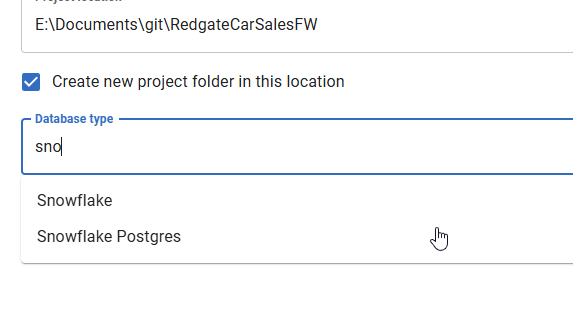
You can read about the advanced capabilities for Snowflake and Databricks, and then start getting those teams to use a well tested, tried-and-true, repeatable, reliable deployment process in Flyway. The same way you do for other platforms.
Summary
I’ve been wanting us to add capabilities for these platforms for some time. Thanks to all customers who’ve provided feedback as that helped us press the teams to prioritize the analytics work.
If you work with Flyway, and you are looking for other platforms, please email a request to your AE or sales@red-gate.com. Those emails, with the details of the need and size of team help us get work done.
Flyway is an incredible way of deploying changes from one database to another, and now includes both migration-based and state-based deployments. You get the flexibility you need to control database changes in your environment. If you’ve never used it, give it a try today. It works for SQL Server, Oracle, PostgreSQL and nearly 50 other platforms.