

Learning any kind of theory is easy, but adapting FinOps and watching it rescue a chaotic cloud environment is where it gets interesting. FinOps is about building a culture where teams understand the financial impact of their technical decisions without killing innovation. Here are a few real-world style stories that remind me why FinOps actually matters.

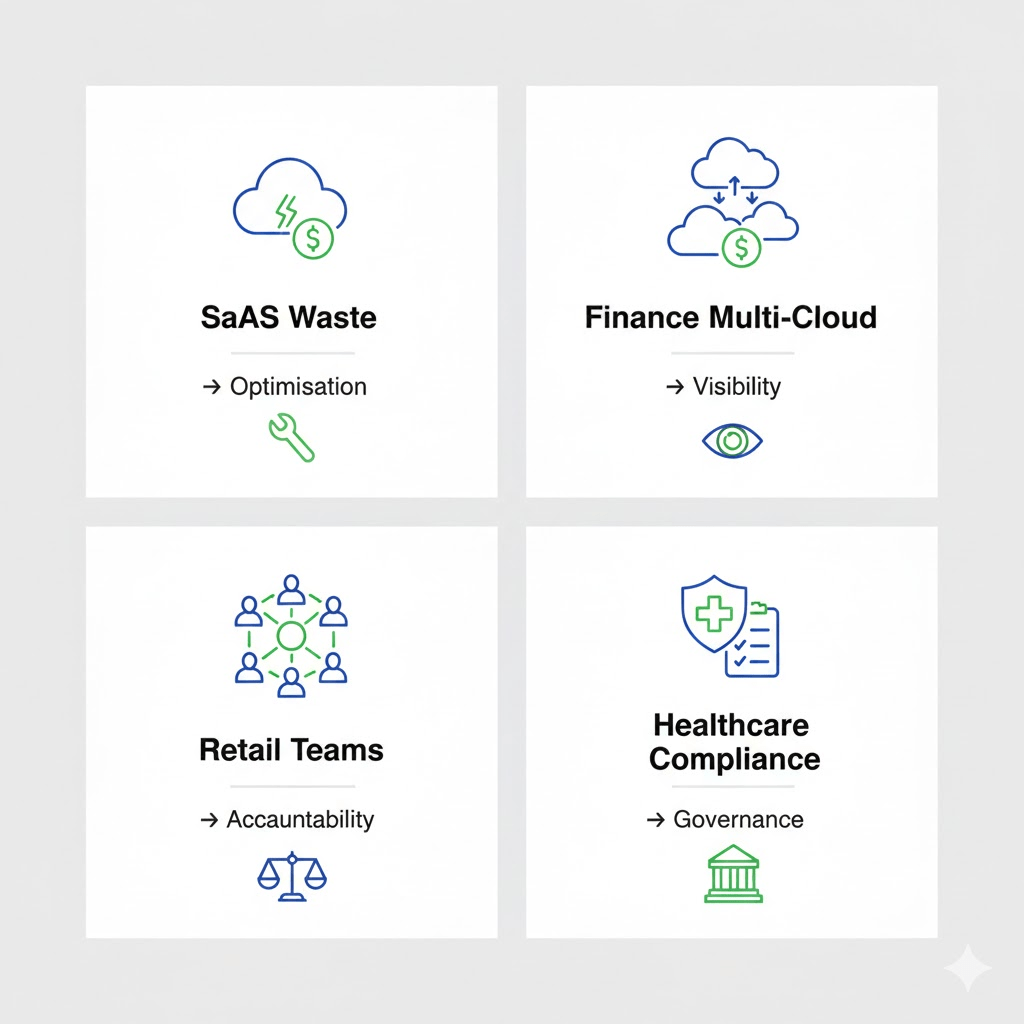
The SaaS Team That Accidentally Collected Sleeping Servers
One SaaS company I worked with scaled fast — which is great — except their cloud bill scaled even faster. Resources were deployed everywhere: unused instances, idle databases, oversized infrastructure… basically a museum of forgotten experiments. We started with visibility: strict tagging, cost dashboards, and regular reviews. Once we could see the waste clearly, engineering introduced auto-scaling and committed workloads to long-term pricing models.
Result: about 30% cost reduction in six months — without slowing product growth. Turns out, deleting unused stuff is surprisingly effective.
The Multi-Cloud Financial Maze
Another organisation ran workloads across multiple cloud platforms. Visibility was messy, cost allocation was guesswork, and finance meetings felt like solving puzzles with missing pieces. We focused on consistent tagging, unified dashboards, and better forecasting. Once spending became transparent, teams could actually make informed decisions instead of reacting to invoices after the fact.
Result: roughly 25% reduction in spend and far fewer awkward conversations between engineering and finance. Everyone finally spoke the same language: data.
Retail Teams Doing Their Own Thing (Very Expensively)
In a large retail environment, every business unit deployed resources independently. Innovation was high — accountability was… optional. Costs spiralled because nobody could see the bigger picture. We embedded cost dashboards into daily workflows and ran regular cross-team reviews. Suddenly engineers could see the real financial impact of their architecture decisions.
Result: around 20% savings, but more importantly, a culture shift. Teams didn’t stop innovating — they just started innovating responsibly.
Healthcare, Compliance, and Cloud Complexity
Healthcare environments bring extra challenges: strict regulations, complex infrastructure, and absolutely no room for mistakes. Optimising costs without touching compliance felt like walking a tightrope. We built a central visibility platform with governance policies and automated optimisation tools to right-size workloads and remove idle resources safely.
Result: about 15% cost reduction while improving compliance visibility. The organisation gained confidence to scale without worrying about security trade-offs.
Conclusion
Across all industries, the pattern is always the same. Visibility drives accountability, accountability drives smarter decisions, and smarter decisions naturally reduce waste. FinOps works best when it’s not treated as a finance-only exercise but as part of everyday engineering culture. My favourite outcome isn’t just the cost savings. It’s when engineers start asking, “Do we actually need this resource?” before launching it, which means the next cloud bill is a lot less dramatic for everyone involved.