Problems displaying this newsletter? View online.
SQL Server Central
Featured Contents
Question of the Day
 
The Voice of the DBA
 

Preserving Data

Most data professionals I know go out of their way to take care of the data entrusted to them. Most people ensure backups are running, lots (hopefully most) test their restores. A few will ensure a good rotation their data offsite. Some of you might have formal rotation schemes, and some might just keep a rolling list of xx backups available.

Likely a few of you don't worry about anything other than the last full backup, which is a risker approach than I'd take.

In the past, I've often kept around monthly backups for a year, usually with more granular backups inside of the month. Beyond that, depending on the system, we might keep quarterly backups or yearly ones for a longer period. These days with cheap storage and automated solutions, I'm sure many of you just assume your backup system keeps xx backups around. the cloud providers will keep point in time backups if you use Azure SQL DB (7 days by default) or AWS RDS (1 or 7 days, depending on the provisioning method). If you use VMs or other systems, you ought to be aware of how long backups will be kept and ensure that fits inside your RPO.

This came to mind as PBS, a US broadcaster, almost lost most of their archived data recently. Their provider stopped responding to them and they couldn't get to the data, which was stored in Iron Mountain data centers. They sued and got access to ensure they could access and use this data. A win for them, and really, for many of us.

I don't expect Azure or AWS to go under, but some of you are using third-parties for backups, even in the cloud. If your provider goes under, can you access your data? I can guarantee if any of these companies has issues (financial, hacking, ransomware, etc.), there will be a few clients that need a restore that day. Resolving this in the courts is likely to be successful, but after how many days?

Backups are important, but only when they facilitate a restore. It's easy to get complacent and think because you've been running backups that you're protected. Test that restores work. Have a plan, and maybe a contractual clause, that ensures you can get to backups in the event of issues. This won't protect you from everything, but it can help speed things up.

And if you're like me, keep at least the last backup (or two) local to your system, in a place that you can get to quickly and easily. It's fine to assume the automated PIT backups will be there, but if AWS or Azure has issues on the day I need a restore, I'd like to think it's worth a small cost to me employer to ensure there's at least one backup separate from the automated service. That SLA refund isn't likely going to cover the lost business when your database is down.


Steve Jones - SSC Editor

Join the debate, and respond to today's editorial on the forums


 Featured Contents
SQLServerCentral Article

How Can SQL Server Detect Application Errors When Developers Can’t?

Pablo Echeverria from SQLServerCentral

How a simple Extended Events session can turn you from a silent guardian to a developer’s best ally. There is an old, undeniable paradox in the life of a Database Administrator: If you do your job perfectly, nobody remembers you exist, only when you resolve problems. When queries are fast, backups are pristine, and the […]

Technical Article

Configure SSMS Dark Mode Step By Step

Additional Articles from SQLServerCentral

You’re using SQL Server Management Studio (SSMS) and would like to use Dark Mode. You’ve looked at the configuration options and don’t see a way to configure it.

Blog Post

From the SQL Server Central Blogs - Monday Monitor Tips: Configuring Access to the MCP Server

Steve Jones - SSC Editor from The Voice of the DBA

I have been experimenting with MCP servers in a few ways, including the Redgate Monitor MCP Server. It took me a few tries, and some help from engineers to...

Blog Post

From the SQL Server Central Blogs - T-SQL Tuesday #201 - Temp Tables, Friend or Foe?

alevyinroc from FLX SQL

T-SQL Tuesday is a monthly blog party hosted by a different community member each month. This month, Jeff Taylor
(blog) asks us for our take on temp tables:

So, do you...

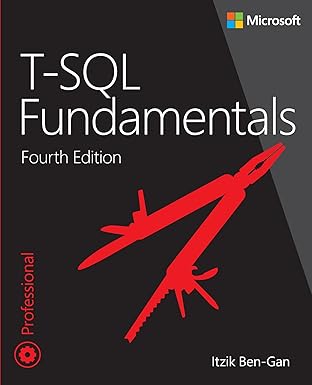
T-SQL Fundamentals

Site Owners from SQLServerCentral

For anyone else who needs to write queries or develop T-SQL code for SQL Server, Azure SQL Database, or Azure SQL Managed Instance


 Question of the Day

Today's question (by Steve Jones - SSC Editor):


Getting Database MaiL Profiles

If I want to return information about all Database Mail profiles on my instance from T-SQL, how can I do this?

Think you know the answer? Click here, and find out if you are right.


 Yesterday's Question of the Day (by Steve Jones - SSC Editor)

The Data API Builder MCP Server Tools

The Data API Builder MCP Server, v2.x, includes a number of tools. What actions can these tools perform in your database?

Answer: DML only

Explanation: The MCP server, as of v2.x, only supports DML tools. Ref: DML Tools - https://learn.microsoft.com/en-us/azure/data-api-builder/mcp/data-manipulation-language-tools

Discuss this question and answer on the forums


Database Pros Who Need Your Help

Here's a few of the new posts today on the forums. To see more, visit the forums.


SQL Server 2016 - Administration
Two queries work until compared with EXCEPT statement - I've got multiple databases on 2 SQL 2019 CU32 servers , all using the same schema and code base. The only difference in patch levels is Test has the July Security Update and Prod has the March one. There's a Table Valued function that fails on one database only and only on prod. Of the […]
SQL Server 2016 - Development and T-SQL
Execute as failure - Security has long been a problem for me. Every time I think I understand something, along comes another issue to show me that I don't. I want to have an application on start-up query some information from a sort of status table, to see what it is allowed to do. I have a schema called […]
SQL Server 2019 - Development
Logic question in a WHERE clause using IIF? - Thanks in advance, I'm trying to avoid using IIF for performance reasons, but the code has me stumped. I'm trying to add a filter in my WHERE clause that basically says "omit records if [BillingReason] in (1, 2, 3) AND ([NewInsID] IS NOT NULL AND [OldInsID] IS NOT NULL)". For example: [BillingReason] = 1, [NewInsID] […]
Editorials
Admin Rights for Everyone - Comments posted to this topic are about the item Admin Rights for Everyone
A Challenge of Our Knowledge - Comments posted to this topic are about the item A Challenge of Our Knowledge
The New World Of AI Robots - Comments posted to this topic are about the item The New World Of AI Robots
An Eventual Consistency Scam - Comments posted to this topic are about the item An Eventual Consistency Scam
Article Discussions by Author
Kerberos Authentication for Aurora PostgreSQL: Mapping AD Groups to Database Roles - Comments posted to this topic are about the item Kerberos Authentication for Aurora PostgreSQL: Mapping AD Groups to Database Roles
RegEx Functions I - Comments posted to this topic are about the item RegEx Functions I
Column Data Types - Comments posted to this topic are about the item Column Data Types
The memory toll of VARCHAR(MAX) in SQL Server - Comments posted to this topic are about the item The memory toll of VARCHAR(MAX) in SQL Server
Transaction Log Truncation - Comments posted to this topic are about the item Transaction Log Truncation
BIT_COUNT() V - Comments posted to this topic are about the item BIT_COUNT() V
How We Reduced SQL Server Infrastructure Costs by 33% on AWS: Lessons From a Database Operations Manager - Comments posted to this topic are about the item How We Reduced SQL Server Infrastructure Costs by 33% on AWS: Lessons From a Database Operations Manager
SQL Server 2022 - Administration
Massive Table Growth Issue – How to Set Up Filegroup Usage Alerts? - Hello We recently encountered an issue where a SQL table unexpectedly grew in size due to an application error. The table increased from a few gigabytes to around 11 TB within one week, which completely filled the PRIMARY filegroup. To prevent this from happening again, I would like to set up an alerting system that […]


RSS FeedTwitter

This email has been sent to {email}. To be removed from this list, please click here. If you have any problems leaving the list, please contact the webmaster@sqlservercentral.com. This newsletter was sent to you because you signed up at SQLServerCentral.com.
©2019 Redgate Software Ltd, Newnham House, Cambridge Business Park, Cambridge, CB4 0WZ, United Kingdom. All rights reserved.
webmaster@sqlservercentral.com


- - - - - - - - - - - - - - - - - - - - - - - - - - - - - - - - -