Problems displaying this newsletter? View online.
SQL Server Central
Featured Contents
Question of the Day
 
The Voice of the DBA
 

Today's AI

"This is the worst version of the car you'll own."

That was a quote from the delivery manager when my wife and I picked up our Lucid Gravity. He said that since the car is very software-oriented and gets regular over-the-air updates, the car keeps improving. The car I bought is the worst version because it keeps getting better. His experience over the last few years with the company has shown that the changes made in software result in customers growing more fond of their vehicles.

Or maybe they're less annoyed by things that don't work well. Ah, the joys of software.

I was reminded of this interaction when I saw someone send a note at Redgate about AI with this quote: “Today's AI is the worst AI you will ever use.”

Is that true? I guess, to the extent that we think the AI model you use today will improve and its capabilities will grow, that might be true. Certainly, the move from Sonnet 4 to 4.5 to 4.6 to 5 seems to be, well ...

The same to me. Has the model improved? By benchmarks and measures, it has. The same could be said for the GPT models from OpenAI. However, I don't know that I have found much difference. Depending on my guidance, I think I've found that I'm as likely to get great results as poor ones from different models. I've tended to stick with Sonnet models, though often for the focused tasks I pick, the Haiku models work, as do the Opus ones.

I'm cheap, so I don't often see the point in using Opus. I haven't found it to be clearly better, though; to be fair, I'm not letting it loose on large tasks, and I am conscious of costs. I'm not paying, but I tend to treat all things I do as if I were paying the bill myself. That helps me to be aware of when I am being effective and efficient.

When I've seen my cars upgrade (first a BMW, then a Tesla, now a Lucid), there have been clear changes that I've appreciated. There are sometimes annoying upgrades, which always remind me of Jeff Moden: Change is inevitable... change for the better is not. That can be true, but I find that the changes made in software often make sense, and I can see how they an improvement. Even when I don't like them.

For a non-deterministic model, however, I don't know how easy it is to measure change, and if the model is "smarter", but I don't use the extra smart-ness, is it better? I have no idea how to measure these improvements, and I am certainly skeptical that these benchmarks and the frontier model hype is driven more by the need for profit than by a better AI model.

Steve Jones - SSC Editor

Join the debate, and respond to today's editorial on the forums


 Featured Contents
SQLServerCentral Article

Split Large Queries in Athena with a Simple Modulo Trick

Rahul Gupta from SQLServerCentral

Learn how you might balance the load in Amazon Athena when you have large partition windows.

External Article

Using Friendly Names for SQL Servers via DNS

Additional Articles from MSSQLTips.com

At my organization, servers have a very cryptic name or a name where you can’t immediately tell the function. For instance, Amazon is the name of the SQL Server which our SharePoint uses as a back-end and Nile is the SQL Server hosting the databases for our HR application. This isn’t intuitive and it makes upgrading the servers a challenge because we always have to go back and touch the applications

Blog Post

From the SQL Server Central Blogs - Don’t Fear the Technology

K. Brian Kelley from Databases – Infrastructure – Security

The concern that a particular technology is going to destroy the world seems to be an ever present fear. The technology changes but the fear and the marketing around...

Blog Post

From the SQL Server Central Blogs - Creating a Custom SQL Server Security Checklist Using the DoD STIG

MarlonRibunal from Marlon Ribunal - SQL, Code, Coffee, etc.

The STIG is detailed, which is a good thing, but I found myself wanting something a little more practical for day-to-day DBA work. Something I could open, work through...

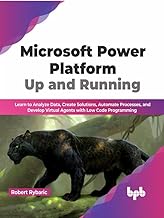
Microsoft Power Platform Up and Running: Learn to Analyze Data, Create Solutions, Automate Processes, and Develop Virtual Agents with Low Code Programming

Site Owners from SQLServerCentral

The book begins with the basics, explaining what low-code and no-code are and showing how to maximize efficiency in creating business applications for one's organization. Next, the book describes the Microsoft Power Platform's foundation, as well as all its components and services. Readers will begin with practical exercises right away, beginning with provisioning a Power Platform environment. Next, the book delves deeper into the Power Platform components such as Power Apps, Power Automate, Power BI, and Power Virtual Agents. Towards the end, the book explains practical exercises for each feature or service where you will gradually build a small business solution for a fictitious organization, Project Wizards, Inc.


 Question of the Day

Today's question (by Steve Jones - SSC Editor):


Finding Trailing Spaces

I have some data in a SQL Server 2025 database. It looks like this for the dbo.Customer table:
CustomerID CustomerName PreferredName
1          Steve        Steve               
2          Andy         Andy               
3          Brian        Brian               
4          Allan        Allan               
5          Devin        Devin               
6          Steve        Steve               
7          Sally        Sally
I want to detect which names have a single trailing space. The CustomerName is a varchar() and the PreferredName is a CHAR(). Does this query detect the problem rows?
SELECT 
       CustomerID,
       CustomerName,
       PreferredName
FROM Customer
WHERE CustomerName <> RTRIM(CustomerName)
OR PreferredName <> RTRIM(PreferredName);

Think you know the answer? Click here, and find out if you are right.


 Yesterday's Question of the Day (by Steve Jones - SSC Editor)

Hyperscale Replicas III

In an Azure SQL Database Hyperscale Edition, how many named replicas can be configured?

Answer: up to 30

Explanation: You can have up to 30 named replicas. Ref: Hyperscale secondary replicas - https://learn.microsoft.com/en-us/azure/azure-sql/database/service-tier-hyperscale-replicas?view=azuresql-db

Discuss this question and answer on the forums


Database Pros Who Need Your Help

Here's a few of the new posts today on the forums. To see more, visit the forums.


SQL Server 2019 - Development
Querying Multiple Tables for the Same Information - I have about 100 Tables that are all suffixed with _Modify. These tables record changes made to these 100 tables. Each of these tables may or may not contain a column called 'User' to record the userid  of who made the change. I can get the names of all the tables with the following query: […]
Editorials
Designing for Teams - Comments posted to this topic are about the item Designing for Teams
Absolute and Relative References - Comments posted to this topic are about the item Absolute and Relative References
Get Along - Comments posted to this topic are about the item Get Along
Finely Tuned Models - Comments posted to this topic are about the item Finely Tuned Models
Make It Routine - Comments posted to this topic are about the item Make It Routine
Older Versions of SQL (v6.5, v6.0, v4.2)
Looking for old SQL Server 1.x - 4.21 disks, manuals, boxes, etc. - Hi everyone, I'm hoping some of the longtime SQL Server professionals here might be able to help me with something. I've been doing a lot of research into the earliest versions of SQL Server for SQL.FM, a SQL Server version and feature reference site I maintain, and as part of this effort I've also started […]
Article Discussions by Author
Checking the Error Log II - Comments posted to this topic are about the item Checking the Error Log II
Parameter Sniffing on SQL Server 2025: A Walkthrough with Real Numbers - Comments posted to this topic are about the item Parameter Sniffing on SQL Server 2025: A Walkthrough with Real Numbers
Moving Beyond the Reboot: Finding the Culprit Behind Memory Pressure - Comments posted to this topic are about the item Moving Beyond the Reboot: Finding the Culprit Behind Memory Pressure
Reserved Words I - Comments posted to this topic are about the item Reserved Words I
RegEx Functions III - Comments posted to this topic are about the item RegEx Functions III
Optimized Locking in SQL Server 2025: Fewer Locks, Less Blocking, and the Cases It Cannot Fix - Comments posted to this topic are about the item Optimized Locking in SQL Server 2025: Fewer Locks, Less Blocking, and the Cases It Cannot Fix
Finding Gaps in Sequential Data Using SQL Server - Comments posted to this topic are about the item Finding Gaps in Sequential Data Using SQL Server
Negative and Positive Numbers - Comments posted to this topic are about the item Negative and Positive Numbers


RSS FeedTwitter

This email has been sent to {email}. To be removed from this list, please click here. If you have any problems leaving the list, please contact the webmaster@sqlservercentral.com. This newsletter was sent to you because you signed up at SQLServerCentral.com.
©2019 Redgate Software Ltd, Newnham House, Cambridge Business Park, Cambridge, CB4 0WZ, United Kingdom. All rights reserved.
webmaster@sqlservercentral.com


- - - - - - - - - - - - - - - - - - - - - - - - - - - - - - - - -