Problems displaying this newsletter? View online.
SQL Server Central
Featured Contents
Question of the Day
The Voice of the DBA
 

The New OS Wars

In the last year I've seen a lot of statements about data and sovereignty between countries. While there have been concerns in the past, there seems to be more worry around the world with AI services primarily being run by, and hosted by, US companies. Plenty of my customers at Redgate Software have concerns over our ability to see data when we run AI models, though we don't store the data. Once the session ends, the data is discarded by policy

Recently I saw a piece about France trying to rid itself of the reliance on US technology, specifically the Windows OS from Microsoft. They are looking to move to their own version of Linux, as well as a number of open source software packages. This quote was fascinating to me: "We can no longer accept that our data, our infrastructure, and our strategic decisions depend on solutions whose rules, pricing, evolution, and risks we do not control."

With AI being added to lots of software, including OSes, I suspect that other countries might look to follow France. I know the EU is looking to move, and Brazil has been trying to use more Linux and OSS for decades. While I find Windows works well, I completely understand wanting to move, especially in this era where many software packages are web-based and can run on a different OS.

SQL Server runs on Linux, and half of my testing is on Linux, since I run SQL Server in a container on my laptop. My desktop still has a native Windows install, but I find it easy to port almost all code back and forth between the two versions. While I understand others might have a preference for PostgreSQL or MySQL or some other OSS platform, I think SQL Server provides a great value for many organizations. I also think it's incredibly hard to port your software and data from one database platform to another.

I do wonder if governments or organizations outside the US that look to leave Windows will leave SQL Server. It's one thing to move away from the OS and software like Office. A little training will get most users productive on a new system in a relatively short time. Moving a software application and its database is a much larger challenge.

I expect SQL Server to remain incredibly popular for many years, and with the ability to configure the new AI capabilities to use your own models, I am not sure a country that wants to reduce their reliance on US technology will choose to do so for their databases. They will likely start elsewhere and continue to use SQL Server for years.

Steve Jones - SSC Editor

Join the debate, and respond to today's editorial on the forums

 
 Featured Contents
SQLServerCentral Article

What Power BI DirectQuery does to your SQL Server (and how to fix it)

kat.korson@redeagle.tech from SQLServerCentral

Power BI DirectQuery can quietly overwhelm your SQL Server. Unlike Import mode, DirectQuery sends live T-SQL for every visual interaction, multiplying queries and placing heavy analytical load on the database. This article explains how to identify the worst offending DirectQuery queries, why the generated SQL is often inefficient, and what you can do from the database side, including indexing, Query Store, and reporting views, to improve performance. It also outlines practical changes on the Power BI side and when DirectQuery is simply the wrong architectural choice.

External Article

How to minimize downtime in a cloud migration

Additional Articles from SimpleTalk

Pat Wright details how to plan cloud migration with minimal downtime. Learn key cutover strategies, testing methods, and critical questions to avoid data loss and system failure.

Blog Post

From the SQL Server Central Blogs - Changing the Cardinality of a FK in Redgate Data Modeler

Steve Jones - SSC Editor from The Voice of the DBA

One of the things a customer asked recently about Redgate Data Modeler was how to adjust a FK constraint between two tables. The tool seemed to makes this  easy,...

Blog Post

From the SQL Server Central Blogs - Future-Proofing: How to Stay Ahead in FinOps

HamishWatson from The Hybrid DBA's Blog

Cloud environments don’t sit still. Pricing models change, services evolve, workloads grow, and suddenly last year’s “perfectly optimised” setup isn’t so perfect anymore. Over time, I’ve realised that FinOps...

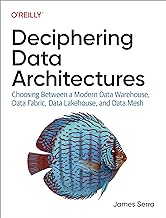
Deciphering Data Architectures

Deciphering Data Architectures

Additional Articles from SQLServerCentral

Data fabric, data lakehouse, and data mesh have recently appeared as viable alternatives to the modern data warehouse. These new architectures have solid benefits, but they're also surrounded by a lot of hyperbole and confusion. This practical book provides a guided tour of these architectures to help data professionals understand the pros and cons of each.


 Question of the Day

Today's question (by Steve Jones - SSC Editor):


The Vector Data Type

What is the vector data type in SQL Server?

Think you know the answer? Click here, and find out if you are right.


 Yesterday's Question of the Day (by Steve Jones - SSC Editor)

Identities and Sequences V

When thinking about the identity property and sequence objects, which of these can generate values before an insert statement is executed?

Answer: Only a sequence object

Explanation: Only a sequence can generate values before an insert. An identity property only gets values at insert times. While you can use SET IDENTITY_INSERT to insert specific values, these aren't generated by the property. Ref:

Discuss this question and answer on the forums


Database Pros Who Need Your Help

Here's a few of the new posts today on the forums. To see more, visit the forums.


Editorials
Poor Names - Comments posted to this topic are about the item Poor Names
Don't Panic - Comments posted to this topic are about the item Don't Panic
Acting with Confidence - Comments posted to this topic are about the item Acting with Confidence
Barely Reviewed Code - Comments posted to this topic are about the item Barely Reviewed Code
Article Discussions by Author
Removing TDE - Comments posted to this topic are about the item Removing TDE
The day-to-day pressures of a DBA team, and how we can work smarter with automation and AI - Comments posted to this topic are about the item The day-to-day pressures of a DBA team, and how we can work smarter with automation and AI
Creating a Simple and Flexible Random Password Generator in SQL Server - Comments posted to this topic are about the item Creating a Simple and Flexible Random Password Generator in SQL Server
SQL Art, Part 3: Happy Easter Fun in SSMS - Comments posted to this topic are about the item SQL Art, Part 3: Happy Easter Fun in SSMS
Identities and Sequences IV - Comments posted to this topic are about the item Identities and Sequences IV
Using OPENJSON - Comments posted to this topic are about the item Using OPENJSON
Data Modeling with dbt for Visual Code: The Fabric Modern Data Platform - Comments posted to this topic are about the item Data Modeling with dbt for Visual Code: The Fabric Modern Data Platform
SQL Server 2022 - Administration
SQL 2017 to SQL 2025. Good to Go ? - We need to replace our Windows server running SQL 2017. Any reason not to go to SQL 2025 ?  Any "gotchas" migrating databases from SQL 2017 to SQL 2025 ?
SQL Server 2022 - Development
Analysis Services Model w/ Direct Query and (Default Veritpaq) - Analysis Services (either the integrated workspace in Power BI or on a SQL Server) lets you interact with the data via: DirectQuery - runtime request transformed into SQL statements against data source Import Modes - runtime request applied against cached in-memory VertPaq data imported (processed) PowerBI and Azure Analysis Services support "composite" models, where some […]
Daily aggregation of Azure Blob Storage by tier (created/tier-change/deleted) - Hello all, I’m looking for advice on how to derive a daily snapshot table from a large fact table in SQL Server that tracks Azure Blob Storage metadata. In production this table can have tens of millions of rows, and its structure cannot be changed. To make the problem reproducible, I’ve created the simplified version […]


RSS FeedTwitter

This email has been sent to {email}. To be removed from this list, please click here. If you have any problems leaving the list, please contact the webmaster@sqlservercentral.com. This newsletter was sent to you because you signed up at SQLServerCentral.com.
©2019 Redgate Software Ltd, Newnham House, Cambridge Business Park, Cambridge, CB4 0WZ, United Kingdom. All rights reserved.
webmaster@sqlservercentral.com


- - - - - - - - - - - - - - - - - - - - - - - - - - - - - - - - -