Problems displaying this newsletter? View online.
SQL Server Central
Featured Contents
Question of the Day
The Voice of the DBA
 

Working Better Under Pressure

One of my colleagues wrote a great post about DBAs and developers, about how a DBA's pushback on bad code isn't to be difficult, it's because they can see the future. I never thought of myself as a modern-day Nostradamus, predicting the future of system performance. Apparently I had another title besides DBA.

Working under pressure and with short deadlines often leads to short cuts. I've made them. I've implemented quick hot fixes. I've forgotten to port changes back to development databases. I've increased our tech debt load, just to solve a more immediate problem.

The challenge is cleaning things up later, when we have more deadlines and things to fix. It seems that we never have enough time to do the job the way we would like, and there's certainly no time to go back later and fix things. Most management won't make this a priority until things get so bad that we have to rewrite a lot of code (which we should never do).

DevOps, pipelines, automations, and yes, AI, helping can reduce some of the tech debt we create if we use those tools appropriately. Which is a big IF. Often we have more immediate pressures that prevent us from finding time to invest in our systems or in ourselves.

Getting a handle on bad code, checking it early, and doing so every time with automation can help prevent some of these issues, even when we are in a hurry. That's why it pays to adapt our work and learn from others. Listen to that DBA that keeps your systems alive. Listen to the DevOps engineers that want you to automate things. Certainly, make them prove their suggestions work, but adopt those patterns. Learn to work with them, rather than against them.

They can see the future.

Steve Jones - SSC Editor

Join the debate, and respond to today's editorial on the forums

 
 Featured Contents
SQLServerCentral Article

PostgreSQL String Functions Part 1

Shivayan Mukherjee from SQLServerCentral

This article covers a number of basic string functions in PGSQL.

External Article

How User-Defined Types work in PostgreSQL: a complete guide

Additional Articles from SimpleTalk

I’m sure I’m not alone when I say, sometimes I get sidetracked. In this particular instance, I hadn’t intended to start learning about User-Defined Types (UDT) in PostgreSQL – I just wanted to test a behavior that involved creating a UDT. But, once I started reading, I was hooked. I mean, four distinct UDTs with different behaviors? That’s pretty cool. Let’s get into it.

Blog Post

From the SQL Server Central Blogs - Why your data still can’t answer a simple question 

Joyful Craftsmen from Joyful Craftsmen Blog

Every organization I talk to has the same problem dressed up in different clothes. Somewhere in the business, a decision maker is sitting on a question that the data...

Blog Post

From the SQL Server Central Blogs - Did You Really Name That Default?

alevyinroc from FLX SQL

Ten years (and a couple jobs) ago, I wrote about naming default constraints to avoid having SQL Server name them for you. I closed with the following statement:

SQL Server...

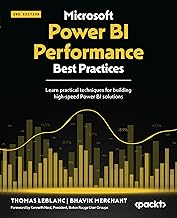
Microsoft Power BI Performance Best Practices: Learn practical techniques for building high-speed Power BI solutions Microsoft Power BI Performance Best Practices

Steve Jones - SSC Editor from SQLServerCentral

In a world dominated by data, organizations heavily rely on business intelligence tools like Power BI for deriving insights and informed decision-making. Yet, as data volumes grow and user demands increase, achieving optimal performance becomes challenging.


 Question of the Day

Today's question (by Steve Jones - SSC Editor):


Identities and Sequences V

When thinking about the identity property and sequence objects, which of these can generate values before an insert statement is executed?

Think you know the answer? Click here, and find out if you are right.


 Yesterday's Question of the Day (by Steve Jones - SSC Editor)

Creating a JSON Document I

I want to create a JSON document that contains data from this table:

TeamID  TeamName  City          YearEstablished
1       Cowboys   Dallas        1960
2       Eagles  Philadelphia  1933

If I run this code, what is returned?

SELECT json_objectagg('Team' : TeamName)
FROM dbo.NFLTeams;

Answer: {"Team":"Cowboys","Team":"Eagles"}

Explanation: This returns a single document with the data from the rows aggregated as separate key:value pairs. Ref: JSON_OBJECTAGG() - https://learn.microsoft.com/en-us/sql/t-sql/functions/json-objectagg-transact-sql?view=sql-server-ver17

Discuss this question and answer on the forums


Database Pros Who Need Your Help

Here's a few of the new posts today on the forums. To see more, visit the forums.


Editorials
Poor Names - Comments posted to this topic are about the item Poor Names
Don't Panic - Comments posted to this topic are about the item Don't Panic
Acting with Confidence - Comments posted to this topic are about the item Acting with Confidence
Barely Reviewed Code - Comments posted to this topic are about the item Barely Reviewed Code
Article Discussions by Author
Removing TDE - Comments posted to this topic are about the item Removing TDE
The day-to-day pressures of a DBA team, and how we can work smarter with automation and AI - Comments posted to this topic are about the item The day-to-day pressures of a DBA team, and how we can work smarter with automation and AI
Creating a Simple and Flexible Random Password Generator in SQL Server - Comments posted to this topic are about the item Creating a Simple and Flexible Random Password Generator in SQL Server
SQL Art, Part 3: Happy Easter Fun in SSMS - Comments posted to this topic are about the item SQL Art, Part 3: Happy Easter Fun in SSMS
Identities and Sequences IV - Comments posted to this topic are about the item Identities and Sequences IV
Using OPENJSON - Comments posted to this topic are about the item Using OPENJSON
Data Modeling with dbt for Visual Code: The Fabric Modern Data Platform - Comments posted to this topic are about the item Data Modeling with dbt for Visual Code: The Fabric Modern Data Platform
SQL Server 2022 - Administration
SQL 2017 to SQL 2025. Good to Go ? - We need to replace our Windows server running SQL 2017. Any reason not to go to SQL 2025 ?  Any "gotchas" migrating databases from SQL 2017 to SQL 2025 ?
SQL Server 2022 - Development
Analysis Services Model w/ Direct Query and (Default Veritpaq) - Analysis Services (either the integrated workspace in Power BI or on a SQL Server) lets you interact with the data via: DirectQuery - runtime request transformed into SQL statements against data source Import Modes - runtime request applied against cached in-memory VertPaq data imported (processed) PowerBI and Azure Analysis Services support "composite" models, where some […]
Daily aggregation of Azure Blob Storage by tier (created/tier-change/deleted) - Hello all, I’m looking for advice on how to derive a daily snapshot table from a large fact table in SQL Server that tracks Azure Blob Storage metadata. In production this table can have tens of millions of rows, and its structure cannot be changed. To make the problem reproducible, I’ve created the simplified version […]


RSS FeedTwitter

This email has been sent to {email}. To be removed from this list, please click here. If you have any problems leaving the list, please contact the webmaster@sqlservercentral.com. This newsletter was sent to you because you signed up at SQLServerCentral.com.
©2019 Redgate Software Ltd, Newnham House, Cambridge Business Park, Cambridge, CB4 0WZ, United Kingdom. All rights reserved.
webmaster@sqlservercentral.com


- - - - - - - - - - - - - - - - - - - - - - - - - - - - - - - - -