Problems displaying this newsletter? View online.
SQL Server Central
Featured Contents
Question of the Day
 
The Voice of the DBA
 

An Azure Outage

Azure (and AWS) still have outages. Is it any better? This editorial was originally published on Mar 14, 2012. It is being re-published as Steve had to take an emergency trip to Belgium.

There was a Windows Azure outage on Feb 29, which resulted in the management service being down for about 8 hours. The actual virtual machines that most customers had were unaffected, but the ability to perform management functions was down for a number of customers.

That's distressing for customers, and embarrassing for Microsoft, who is spending a lot of resources to promote cloud computing and their Azure services. It lends credence to the fears and concerns of many technology professionals that outsourcing parts of their infrastructure to a cloud provider is a problem.

However is it a big problem? I've had outages in nearly every company I've worked, often because of problems in the architectures that are built by those same IT people that disparage the cloud. I've found that a few outages were from vendor patches, a few from failures, and a good portion were stupid mistakes, often from a lack of testing. We worked hard to fix things, but we often weren't able to give management much more of an idea when things would be working than a good status page for Azure would provide.

It's easy to disparage outsourced services as less reliable than in-house services, but I'm not sure that's true. There is definitely a loss of control, but that comes at a cost savings, and the balance between them is something that each company needs to decide. However I think lots of management might prefer in-house infrastructure for a simple reason: it gives them a specific neck to choke, and possibly replace, when things go wrong.

Steve Jones - SSC Editor

Join the debate, and respond to today's editorial on the forums


 Featured Contents
SQLServerCentral Article

Optional Parameter Plan Optimization in SQL Server 2025: Fixing the Kitchen-Sink Search Procedure

vgupta from SQLServerCentral

See how SQL Server 2025 uses Optional Parameter Plan Optimization to create separate plans for selective and unfiltered searches, how to verify the dispatcher and variants, and when dynamic SQL or recompilation is still the better choice.

Technical Article

Database Animations: What’s a Residual Predicate and Why Is It Bad?

Additional Articles from SQLServerCentral

Normally when you're looking at an execution plan, and you see an index seek followed by a key lookup, that means it's running relatively quickly.

From the SQL Server Central Blogs - Measuring RAG Solutions: Are We Retrieving the Right Information?

epivaral from SQL Guatemala

A RAG pipeline that answers questions in the demo is not the same thing as a RAG pipeline that answers them correctly. The gap between the two only shows up...

Blog Post

From the SQL Server Central Blogs - Building a DBA Agent for Your SQL Server Estate with MCP

aen from Anthony Nocentino Blog

Yesterday I gave a talk for MSSQLTips called “Building a DBA Agent for Your SQL Server Estate”. I’ll drop the recording into this post once it’s published. What I...

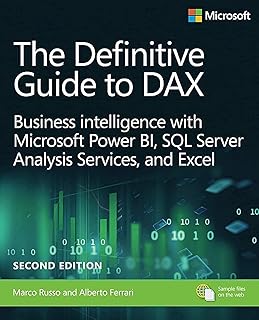
Definitive Guide to DAX cover

The Definitive Guide to DAX: Business Intelligence for Microsoft Power BI, SQL Server Analysis Services, and Excel

Site Owners from SQLServerCentral

Now expanded and updated with modern best practices, this is the most complete guide to Microsoft’s DAX language for business intelligence, data modeling, and analytics. Expert Microsoft BI consultants Marco Russo and Alberto Ferrari help you master everything from table functions through advanced code and model optimization.


 Question of the Day

Today's question (by aniap):


ORDER BY alias

There is a table tmp_tab:
CREATE TABLE tmp_tab (
id int,
val int
);
INSERT INTO tmp_tab VALUES
(1, 1),
(2, NULL),
(3, 3),
(4, 4),
(5, 5);
You want to order the rows ids by the following expression:
    ISNULL(val, id) + 1
Which of the following queries produces the expected ordering and why? (Select all correct)

Think you know the answer? Click here, and find out if you are right.


 Yesterday's Question of the Day (by Steve Jones - SSC Editor)

Squared Values

What happens when I run this code in SQL Server 2022?

SELECT SQUARE('12')

Answer: 144

Explanation: This returns 144. Square takes a float parameter, but will handle any value that implicitly converts to float. Ref: SQUARE() - https://learn.microsoft.com/en-us/sql/t-sql/functions/square-transact-sql?view=sql-server-ver17

Discuss this question and answer on the forums


Database Pros Who Need Your Help

Here's a few of the new posts today on the forums. To see more, visit the forums.


SQL Server 2019 - Administration
How do I connect to a SQL Server database on my ISP? - I've got a web application for my side business. I've added a SQL Server 2019 database to it. Now, I'm trying to connect to it using SSMS 20.2 and also Visual Studio Code. I've been following the instructions they have here which seems straight forward to me. The error I'm getting from Visual Studio Code […]
SQL Server 2019 - Development
advice on ssrs version control - Hi we're a bit behind on versioning ssrs.  I think we have over 1600 reports, 65 data sources and over 700 folders on our main sql server.  And a smaller amount on a separate sql server in one of our plants.    for some reason we also keep xls (over 400) , pdf's (over 3,000) […]
Editorials
The Costs of Multiple Platforms - Comments posted to this topic are about the item The Costs of Multiple Platforms
Looking for New Blood - Comments posted to this topic are about the item Looking for New Blood
The End of Summer - Comments posted to this topic are about the item The End of Summer
Measuring Productivity - Comments posted to this topic are about the item Measuring Productivity
Article Discussions by Author
Stored Procedures for Server-Level Object and Column Search - Comments posted to this topic are about the item Stored Procedures for Server-Level Object and Column Search
Databricks Genie Spaces for SQL Analysts: Natural Language Querying Without Leaving Your Data Platform - Comments posted to this topic are about the item Databricks Genie Spaces for SQL Analysts: Natural Language Querying Without Leaving Your Data Platform
RegEx Functions II - Comments posted to this topic are about the item RegEx Functions II
Adding new column with DEFAULT - Comments posted to this topic are about the item Adding new column with DEFAULT
Server-Level Row Counts for Tables and Views - Comments posted to this topic are about the item Server-Level Row Counts for Tables and Views
Hyperscale Replicas I - Comments posted to this topic are about the item Hyperscale Replicas I
Parameter Sensitive Plan Optimization vs. Parameter Sniffing: What SQL Server Fixes and What It Doesn't - Comments posted to this topic are about the item Parameter Sensitive Plan Optimization vs. Parameter Sniffing: What SQL Server Fixes and What It Doesn't
Importing Excel files into SQL Server using DuckDB and Python - Comments posted to this topic are about the item Importing Excel files into SQL Server using DuckDB and Python
SQL Server 2022 - Administration
Performance Regression After Upgrading from SQL Server 2016 to 2022 - Bonjour à tous, La semaine dernière, nous avons effectué une mise à niveau de notre instance SQL Server, en passant de SQL Server 2016 à SQL Server 2022. Au début, tout s'est bien passé et nous avons défini le niveau de compatibilité de la base de données à 160 comme recommandé. Cependant, peu après la […]


RSS FeedTwitter

This email has been sent to {email}. To be removed from this list, please click here. If you have any problems leaving the list, please contact the webmaster@sqlservercentral.com. This newsletter was sent to you because you signed up at SQLServerCentral.com.
©2019 Redgate Software Ltd, Newnham House, Cambridge Business Park, Cambridge, CB4 0WZ, United Kingdom. All rights reserved.
webmaster@sqlservercentral.com


- - - - - - - - - - - - - - - - - - - - - - - - - - - - - - - - -