Problems displaying this newsletter? View online.
SQL Server Central
Featured Contents
Question of the Day
The Voice of the DBA
 

Over or Under Provisioned

Lots of people move to the cloud; it's common. In fact, it's very common to hear customers who are being asked to migrate their workloads to a cloud vendor for a variety of reasons. You might not agree, but often there is some reason to move to the cloud. Sometimes it's even moving from one cloud to another, just because one of the big three (AWS, Azure, GCP) seems more attractive this year than the one from last year.

When you move, do you size your system for the peak? 80% of the peak? Perhaps there is another goal for which you design. Do you worry about ever being under-provisioned and letting customers have a slower system? Or do you ensure you never hit the peak, which increases costs?

Auto-scaling can help, but it doesn't seem to have worked as well for database systems as it does for serverless functions or other types of workloads. Compute is much easier to scale than stateful database systems that need CPUs and RAM ready on a particular system instantly. In fact, the "serverless" Azure SQL database is attractive to me more for it's ability to scale the CPUs and RAM more than the on/off capability.

I was in a discussion recently with a number of data professionals who tend to over-provision a bit, mostly because their companies are willing to. It saves them headaches and phone calls (more angry texts these days), but it also means developers aren't incentivized to optimize any queries. Unless there is a way to determine that the aggregate of all queries could lower the size of the resource provisioned, no one wants to fix any poorly running code.

That was interesting to me, as I'd think we'd want to optimize code as we pay every month, but the reality is that we pay every month for a level of resources. Coming in under that level is all that's important. If we use 99% of those resources or 25%, we pay the same amount. It's like saying we want to watch a movie every night because we pay for Netflix/Apple TV/etc. We've spent the money, so whether we watch 1 a week or 5 a week, there's no point in optimizing our time to get value out of the subscription.

In the PaaS world, that might change, but often we're still purchasing a tier of resources, not paying for each query. Until we need to raise that tier, no one worries about efficiency. If we can't prove a lower tier would work with better code, no one cares.

It's a little sad, but perhaps some future version of monitoring that can spin up a digital twin, optimize some code, and model a lower tier will take hold among all the performance tuners and monitoring vendors. Maybe with a few Claude code tokens, one of you will solve that problem.

For now, I still think it's worth trying to optimize code, especially if an AI can give you suggestions and prove things run quicker in a test environment. If the cost of code is getting lower, then why not extend those savings to SQL code?

Steve Jones - SSC Editor

Join the debate, and respond to today's editorial on the forums

 
 Featured Contents
SQLServerCentral Article

Complex Data Processing with dbt Python Models: The Fabric Modern Data Platform

John Miner from SQLServerCentral

Data build tool (dbt) is an open-source command line tool that helps engineers transform data using SQL scripts.  However, there are limitations to what can be done with the Structure Query Language (SQL).  That is where dbt Python models can be used to perform complex tasks.  A dbt Python model is a function that reads […]

SQLServerCentral Article

PASS Europe comes to Frankfurt

Steve Jones - SSC Editor from SQLServerCentral

PASS Europe comes to Frankfurt, Germany on June 10-11, 2026.

Blog Post

From the SQL Server Central Blogs - PowerShell Strikes Back: Return of the Loop

gbargsley from GarryBargsley

Welcome back to PowerShell Strikes Back. We’re three weeks in, and the training is paying off. In Week 1, we learned that quotes are not interchangeable. In Week 2,...

From the SQL Server Central Blogs - Databases and AI Agents

BLOB EATER from All About SQL

As part of my wider work exploring Claude Code and AI-assisted database engineering, I have been looking at how AI can support SQL Server operations. A failed job, missed...

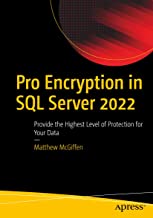
Pro Encryption in SQL Server 2022

Pro Encryption in SQL Server 2022: Provide the Highest Level of Protection for Your Data

Additional Articles from SQLServerCentral

This in-depth look at the encryption tools available in SQL Server shows you how to protect data by encrypting it at rest with Transparent Data Encryption (TDE) and in transit with Transport Level Security (TLS). You will know how to add the highest levels of protection for sensitive data using Always Encrypted to encrypt data also in memory and be protected even from users with the highest levels of access to the database. The book demonstrates actions you can take today to start protecting your data without changing any code in your applications, and the steps you can subsequently take to modify your applications to support implementing a gold standard in data protection.


 Question of the Day

Today's question (by Steve Jones - SSC Editor):


Secure Cached Plans

The DMV, sys.dm_exec_cached_plans, contains rows for each cached plan on an instance. In Azure SQL Database, not every used has rights to every database, as there does exist an instance behind each database. How is security handled for this DMV in Azure?

Think you know the answer? Click here, and find out if you are right.


 Yesterday's Question of the Day (by Steve Jones - SSC Editor)

Representing Money

Which types of currency does the money data type represent?

Answer: Any currency value

Explanation: The money data type is based on a numeric type, so it can store the value of any currency. There are a list of currency symbols it converts from in the ref. Ref: Money and Smallmoney - https://learn.microsoft.com/en-us/sql/t-sql/data-types/money-and-smallmoney-transact-sql?view=sql-server-ver17

Discuss this question and answer on the forums


Database Pros Who Need Your Help

Here's a few of the new posts today on the forums. To see more, visit the forums.


SQL Server 2019 - Administration
Dealing with huge heap tables - Recently, our dev teams approach me for advice on improving their huge heap table which are causing issues on their DBs IO usage. This particular DB is hosting an old in-house application and the dev teams has been doing a lot of work modernizing & improving it's table structure. They hit the wall when trying […]
Data Transformation Services (DTS)
Before Using AI with Business Data, Read This - Artificial intelligence tools are quickly becoming part of daily business operations, from document analysis and reporting to workflow automation and customer support. While these systems can improve productivity, many organizations are adopting AI faster than they are addressing potential privacy and security risks. One of the biggest concerns is how sensitive business information is handled […]
Editorials
The New Software Team - Comments posted to this topic are about the item The New Software Team
Limit the Blast Radius - Comments posted to this topic are about the item Limit the Blast Radius
What Can AI Really Do? - Comments posted to this topic are about the item What Can AI Really Do?
We Are Eating Our Own Seed Corn - Comments posted to this topic are about the item We Are Eating Our Own Seed Corn
Article Discussions by Author
Database Mail in SQL Server 2022 - Comments posted to this topic are about the item Database Mail in SQL Server 2022
The string_agg function - Comments posted to this topic are about the item The string_agg function
Stairway to Reliable Database Deployment Level 3 – Rehearsing Changesets Across Environments - Comments posted to this topic are about the item Stairway to Reliable Database Deployment Level 3 – Rehearsing Changesets Across Environments
QUOTENAME Quote Parameters - Comments posted to this topic are about the item QUOTENAME Quote Parameters
Why Your Index Isn't Being Used? - Reading Execution Plans to Find the Real Culprit - Comments posted to this topic are about the item Why Your Index Isn't Being Used? - Reading Execution Plans to Find the Real Culprit
Distance Metric Algorithms - Comments posted to this topic are about the item Distance Metric Algorithms
Designing SQL Server ETL Pipelines That Don't Break at Scale - Comments posted to this topic are about the item Designing SQL Server ETL Pipelines That Don't Break at Scale
Detecting Deadlocks Quickly - Comments posted to this topic are about the item Detecting Deadlocks Quickly
SQL Server 2022 - Administration
Merge Replication failing with Error converting data type nvarchar to numeric - After upgrading 2 Merge Replicated databases to SQL 2022 and re-establishing the Merge Replication on the new environment, the synchronization is giving me the error message: "Error converting data type nvarchar to numeric. (Source: MSSQLServer, Error number: 8114)". The initial create of the Publication/Subscription failed silently because of some unusual network and cross domain restrictions, […]


RSS FeedTwitter

This email has been sent to {email}. To be removed from this list, please click here. If you have any problems leaving the list, please contact the webmaster@sqlservercentral.com. This newsletter was sent to you because you signed up at SQLServerCentral.com.
©2019 Redgate Software Ltd, Newnham House, Cambridge Business Park, Cambridge, CB4 0WZ, United Kingdom. All rights reserved.
webmaster@sqlservercentral.com


- - - - - - - - - - - - - - - - - - - - - - - - - - - - - - - - -