Problems displaying this newsletter? View online.
SQL Server Central
Featured Contents
Question of the Day
The Voice of the DBA
 

The New Software Team

One of the things I used to emphasize in talks about DevOps is that no modern software of any significance is built by one person. Everything takes a team, so the foundation of version control becomes extremely important. We need a way to coordinate work across multiple individuals and communicate what changes are being made. This requires a strong foundation, and that starts with version control.

In 2026, that hasn't changed, but what has changed is the makeup of the team. No longer do I need a bunch of humans. In today's world, with extremely powerful AI LLMs, we can have a team of AI agents that write code, often at a pace far exceeding that of human teams. However, they still need to coordinate and communicate and ensure their changes mesh together.

In this short article on the rebirth of programming, the team is a team of n humans and m agents. N=1, and the architect, the coordinator, the project manager is the human (or a few humans). Code becomes less important, and the tests and other elements that describe and verify software become more important. Maybe even more important than today.

I'd even go so far as to say the performance of the code might not matter in the short term. Since the cost of writing, or re-writing code, becomes lower and lower, when something doesn't perform well, just spin off a new team of your agent coders who don't need sleep, aren't worse at development if they work more than 40 hours every week, and are always happy to tackle new work. It's a project manager's dream team. At least, in theory.

That being said, the cost of writing this code isn't zero. We see this rising every day, sometimes at a level that exceeds what we might pay human developers. That might change over time, but we certainly see some people spending more on tokens than salaries.

And your agents do lose focus. Fortunately, you can fire them and hire new ones every day, or every hour. It's like a team of characters in a game that respawn on demand to tackle the next challenge. There is still plenty of coordination and onboarding work for the manager. They will need excellent documentation and descriptions of what the code looks like, what needs to be done, and all of your guidelines on how to structure things. Lots of tests are needed, but your team can build them (with oversight).

It seems like an amazing system, but we're learning that excellent team leaders who are good architects are in short supply. And they can't work long hours. Some early evaluation of these software managers seems to indicate that they can't even work the full 8 hours for 5 days a week with a high level of effectiveness. They might not even be able to work half that amount of time.

So is the falling cost of code going to produce more software? Likely, though perhaps with many more leaders needed to manage those teams. I can certainly see many more one person companies spawned during off hours, where one person can focus on their passion project, something completely separate from the work they are paid to do by someone else.

It's going to be fascinating to watch this work itself out across the next decade.

Steve Jones - SSC Editor

Join the debate, and respond to today's editorial on the forums

 
 Featured Contents
SQLServerCentral Article

Database Mail in SQL Server 2022

Abdellateef Ibrahim from SQLServerCentral

This article covers the basics of getting Database Mail setup in SQL Server.

External Article

Local vs remote MCP servers – which should you choose?

Additional Articles from SimpleTalk

Should you choose a local or remote MCP server? The best option depends on your security needs, performance goals, and deployment model. This guide explains the differences between local and remote Model Context Protocol (MCP) servers, including privacy, scalability, latency, and integration trade-offs.

Blog Post

From the SQL Server Central Blogs - Data Engineering Books Worth Having on Your Shelf (or your tablet)

epivaral from SQL Guatemala

Good documentation gets you started. Good books get you deep. After years of working with cloud data platforms, SQL engines, and machine learning pipelines, a handful of titles keep...

Blog Post

From the SQL Server Central Blogs - AWS RDS Aurora - our first approach

epivaral from SQL Guatemala

When starting with AWS RDS Aurora for managing relational databases in the cloud, many data engineers face the challenge of leveraging its cutting-edge features while maintaining performance and reliability....

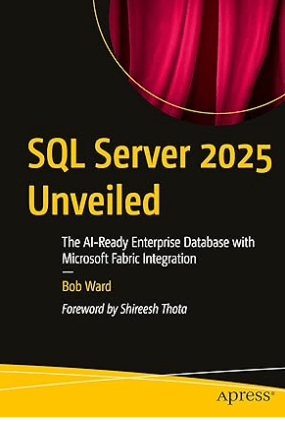
SQL Server 2025 Unveiled: The AI-Ready Enterprise Database with Microsoft Fabric Integration

SQL Server 2025 Unveiled: The AI-Ready Enterprise Database with Microsoft Fabric Integration

Site Owners from SQLServerCentral

With built-in AI for application development and advanced analytics powered by Microsoft Fabric, SQL Server 2025 empowers you to innovate—securely and confidently. This book shows you how.


 Question of the Day

Today's question (by Alessandro Mortola):


The string_agg function

We create the following table and then insert some records in it:
create table t1 (
   id int primary key,
   category char(1) not null,
   product varchar(50)
);

insert into t1 values
(1, 'A', 'Product 1'),
(2, 'A', 'Product 2'),
(3, 'A', 'Product 3'),
(4, 'B', 'Product 4'),
(5, 'B', 'Product 5');
What happens if we execute the following query in both Sql Server and PostgreSQL?
select id, 
category, 
string_agg(product, ';')
                 over (partition by category order by id
                 rows between unbounded preceding and unbounded following) as stragg
from t1;

Think you know the answer? Click here, and find out if you are right.


 Yesterday's Question of the Day (by Steve Jones - SSC Editor)

QUOTENAME Quote Parameters

When I use QUOTENAME(), I can optionally provide the character used to surround the string in the result. Can I use any character?

Answer: There is a limited list of characters

Explanation: There is a limited list of characters: brackets, single or double quotation marks, parenthesis, braces, greater/less than or back ticks. Ref: QUOTENAME() - https://learn.microsoft.com/en-us/sql/t-sql/functions/quotename-transact-sql?view=sql-server-ver17

Discuss this question and answer on the forums


Database Pros Who Need Your Help

Here's a few of the new posts today on the forums. To see more, visit the forums.


SQL Server 2016 - Administration
SQL Server Showing Out of Space But Plenty of Drive Space - We have a SQL Server installed. We have a 500GB drive for the database. Currently, we have 95 GB free on this drive. When I go into the database, and look at the Shrink File toolset, it shows the database at 410000 MB and the Available Free Space at 4500 MB, but the drive itself […]
Data Transformation Services (DTS)
Before Using AI with Business Data, Read This - Artificial intelligence tools are quickly becoming part of daily business operations, from document analysis and reporting to workflow automation and customer support. While these systems can improve productivity, many organizations are adopting AI faster than they are addressing potential privacy and security risks. One of the biggest concerns is how sensitive business information is handled […]
Editorials
What Can AI Really Do? - Comments posted to this topic are about the item What Can AI Really Do?
We Are Eating Our Own Seed Corn - Comments posted to this topic are about the item We Are Eating Our Own Seed Corn
The New Wave of Security Threats - Comments posted to this topic are about the item The New Wave of Security Threats
There's Too Much to Learn - Comments posted to this topic are about the item There's Too Much to Learn
Article Discussions by Author
Why Your Index Isn't Being Used? - Reading Execution Plans to Find the Real Culprit - Comments posted to this topic are about the item Why Your Index Isn't Being Used? - Reading Execution Plans to Find the Real Culprit
Distance Metric Algorithms - Comments posted to this topic are about the item Distance Metric Algorithms
Designing SQL Server ETL Pipelines That Don't Break at Scale - Comments posted to this topic are about the item Designing SQL Server ETL Pipelines That Don't Break at Scale
Detecting Deadlocks Quickly - Comments posted to this topic are about the item Detecting Deadlocks Quickly
Creating a JSON Document IV - Comments posted to this topic are about the item Creating a JSON Document IV
Restoring Azure Key Vault Keys and Validating SQL Server TDE Recovery: Level 7 of the Stairway to TDE - Comments posted to this topic are about the item Restoring Azure Key Vault Keys and Validating SQL Server TDE Recovery: Level 7 of the Stairway to TDE
SSRS Is Dead. Here Are Your Real Options - Comments posted to this topic are about the item SSRS Is Dead. Here Are Your Real Options
The Distance Metric - Comments posted to this topic are about the item The Distance Metric
SQL Server 2022 - Development
Permissions Removal When Changing Object Schema - When the schema of an object is changed, SQL Server wipes out the previous set of permission grants. Usually this applies when the permissions are granular. Such as "GRANT SELECT ON abc.MyTable TO Mylogin." And usually, I only care when I have to drop the schema-owning user from the database for whatever reason. What I […]


RSS FeedTwitter

This email has been sent to {email}. To be removed from this list, please click here. If you have any problems leaving the list, please contact the webmaster@sqlservercentral.com. This newsletter was sent to you because you signed up at SQLServerCentral.com.
©2019 Redgate Software Ltd, Newnham House, Cambridge Business Park, Cambridge, CB4 0WZ, United Kingdom. All rights reserved.
webmaster@sqlservercentral.com


- - - - - - - - - - - - - - - - - - - - - - - - - - - - - - - - -