Problems displaying this newsletter? View online.
SQL Server Central
Featured Contents
Question of the Day
The Voice of the DBA
 

Multiple Deployment Processes

We had a Simple Talks podcast recently where we discussed roll forward vs roll back. You can watch the episode and listen to our thoughts, but one interesting place was when we talked about deployments. Grant mentioned that he deployed from version control/source control at a previous employer. I asked him whether he did that for every system.

His response: "Well, ..."

He admitted that most, but not all, databases came from a controlled source. There were some systems that had a more ad hoc change process. I wonder how many of you have consistent processes throughout your organization. I suspect not many of you do, especially if an organization isn't small. Often, different groups and applications are in a constant state of flux, with lots of different processes and protocols.

Some groups are more mature and have stable staff who expect to deploy changes in a certain way. This might be on a known cadence, with documents or processes in place already. Others applications might have been developed quickly; perhaps they are newer and use more automation to deploy changes. Some might even use things like packages from an ORM or a vendor that takes control of database changes away from anyone managing the database. Does anyone deal with Spring Boot and very optimistic developers?

I wonder how many of you have a consistent process for promoting database code to production across all your teams. Maybe 80% is a better metric, as this accounts for those groups severely limited by legacy technology or those that might be experimenting with new ways of working.

Even those companies that have platform engineering groups in place to ease the flow for both developers and operations often aren't consistent throughout the organization. Often, getting everyone to adopt a standard is hard and takes time.

That might be the biggest challenge with standardizing database deployments: time. Organizations grow and change, new technologies come, and by the time we think we've gotten everyone to agree to change, who everyone is has changed. We have someone or something new, and we're forever chasing standardization. Even when we might have a great DevOps process or a platform engineering team for software, we don't do this for databases.

I believe having a consistent, standardized process is a worthwhile goal, but one where 80% success is probably good enough in most organizations. If you can get most teams to follow the same process, you'll increase efficiencies and ensure a better software development life cycle.

Steve Jones - SSC Editor

Join the debate, and respond to today's editorial on the forums

 
 Featured Contents
SQLServerCentral Article

How to Use sqlpackage to Detect Schema Drift Between Azure SQL Databases

Kunal Rathi from SQLServerCentral

This article explains how I use sqlpackage to detect schema drift and generate a delta script that shows exactly what’s different.

External Article

What’s New in SSMS 22

Additional Articles from MSSQLTips.com

SSMS 22 has several new features. Is there a compilation list of the new features? How will these features help me as a SQL Server professional?

Blog Post

From the SQL Server Central Blogs - AI: Blog a Day – Day 3: LLM Models – Open Source vs Closed Source

Vinay Thankur from Vinay Thakur

Continuing from Day 2 , we learned introduction on Generative AI and Agentic AI, Today on Day 3 I would like to write about LLM models — Open Source...

Blog Post

From the SQL Server Central Blogs - Rolling Back a Broken Release

Steve Jones - SSC Editor from The Voice of the DBA

We had an interesting discussion about deployments in databases and how you go forward or back from the point when you discover a problem. You can watch the episode...

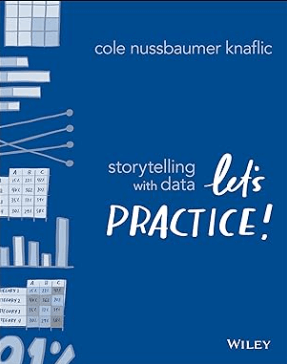
Storytelling with Data: Let's Practice!

Site Owners from SQLServerCentral

Influence action through data! This is not a book. It is a one-of-a-kind immersive learning experience through which you can become—or teach others to be—a powerful data storyteller.


 Question of the Day

Today's question (by Steve Jones - SSC Editor):


Upgrading Admin Queries

I have a query from a former DBA that we run on SQL Server 2025 to check on database metadata. This query references sys.sysaltfiles. I want to refactor this code to be more modern. Which DMV should I reference instead?  

Think you know the answer? Click here, and find out if you are right.


 Yesterday's Question of the Day (by Steve Jones - SSC Editor)

OPENQUERY Flexibility

Which of these are valid OPENQUERY() uses?

Answer: SELECT ... FROM OPERQUERY(), INSERT OPENQUERY(), UPDATE OPENQUERY(), DELETE OPENQUERY()

Explanation: All of these are valid uses of OPENQUERY(). Ref: OPENQUERY() - https://learn.microsoft.com/en-us/sql/t-sql/functions/openquery-transact-sql?view=sql-server-ver17

Discuss this question and answer on the forums


Database Pros Who Need Your Help

Here's a few of the new posts today on the forums. To see more, visit the forums.


SQL Server 2019 - Administration
Can an Azure App Service Managed Identity be used for SQL Login? - I'm fairly certain I know the answer to this from digging into it yesterday, but would like a second opinion. We're (finally) moving some applications to cloud-native, using Azure App Services and the developer would like to, if possible, use a Managed Identity and Key Vault for the application to connect to the SQL Server […]
Ola Hallengren Index Optimize Maintenance can we have data compression = page - I have a quick question on Ola Hallengren Index Optimize Maintenance . Do we have data_compression = page ? I have checked online and see @DataCompression = 'Page' --please add this line for IndexOptimize script . Not sure if it is true or not so checking with the experts.
SQL Server 2019 - Development
how to write this query? - hi everyone I am not sure how to write the query that will produce the expected results.  Basically, I need to convert data found in columns and put them into rows.  I have provided sample data and screenshot of expected result.  Can someone please help me with this? Thank you Sample Data drop table if […]
how do i map the "current" object entry in for each to one variable - hi, in an ssis  for each loop over an object variable called MyListVariable, i am trying to map the current list entry to a single variable called FileName. The evidence suggest i'm not doing this right as FileName isnt changing inside the loop.  I set the name property in the flat file connector of a […]
SQL Azure - Administration
Azure Synapse database refresh - Hi Team, I am trying to refresh the Azure Synapse Dedicated pool from production to lower environment. Is there a standard documented process which we can follow similar to Azure SQL database. I have searched in various forums but none of them were worked in our environment due to policy restrictions. Please do the needful. […]
Editorials
Writing as an Art and a Job - Comments posted to this topic are about the item Writing as an Art and a Job
Rollback vs. Roll Forward - Comments posted to this topic are about the item Rollback vs. Roll Forward
Article Discussions by Author
String Similarity II - Comments posted to this topic are about the item String Similarity II
Supervised versus Unsupervised Training of an Artificial Neural Network - Comments posted to this topic are about the item Supervised versus Unsupervised Training of an Artificial Neural Network
Foreign Keys - Foes or Friend? - Comments posted to this topic are about the item Foreign Keys - Foes or Friend?
Fun with JSON I - Comments posted to this topic are about the item Fun with JSON I
A Quick Restore - Comments posted to this topic are about the item A Quick Restore
Guarding Against SQL Injection at the Database Layer (SQL Server) - Comments posted to this topic are about the item Guarding Against SQL Injection at the Database Layer (SQL Server)
SQL Server 2022 - Development
Dynamic Unpivot - I have a table I didn't design that has tons of repeating groups in it... here's an abbreviated version: USE tempdb; go CREATE TABLE [dbo].[Toxicity2]( [RecordID] [int] IDENTITY(1,1) NOT NULL, [PatientID] [int] NOT NULL, [Cycle] [tinyint] NOT NULL, [ANEMIA] [tinyint] NULL, [Causality1] [tinyint] NULL, [Relatedness1] [tinyint] NULL, [ALOPECIA] [tinyint] NULL, [Causality2] [tinyint] NULL, [Relatedness2] [tinyint] […]
Simulating Mercury’s Orbital Motion Using Pure T-SQL (NASA 2025 Dataset) - SQL Server is typically viewed as a transactional or analytical database engine. However, it is also a deterministic numerical computation environment capable of handling large-scale scientific data. This article demonstrates how Microsoft SQL Server can: Store astronomical datasets Compute derived physical quantities Reconstruct velocity from an algebraic invariant Compare simulation results against real observational data […]


RSS FeedTwitter

This email has been sent to {email}. To be removed from this list, please click here. If you have any problems leaving the list, please contact the webmaster@sqlservercentral.com. This newsletter was sent to you because you signed up at SQLServerCentral.com.
©2019 Redgate Software Ltd, Newnham House, Cambridge Business Park, Cambridge, CB4 0WZ, United Kingdom. All rights reserved.
webmaster@sqlservercentral.com


- - - - - - - - - - - - - - - - - - - - - - - - - - - - - - - - -