Problems displaying this newsletter? View online.
SQL Server Central
Featured Contents
Question of the Day
 
The Voice of the DBA
 

Data Decisions or Instinct?

This editorial was originally publiched on July 24, 2014. It is being republished as Steve is on vacation.

Most of us that are data professionals think the best way to make decisions is to use data to justify some course of action. We look for patterns in data, some guidance that the information we have will lead us to make the best choice for our organization. Google has talked about making data driven decisions as a part of their success and they think more organizations should do this. Any number of other companies also use data to power their BI systems and dashboards that help their employees make better choices.

That seems in contrast to this piece from the Harvard Business Review that says that great decisions don't start with data. It talks about using stories and emotions, with a few key facts sprinkled in, to help sell ideas and get decisions made. On one hand I agree that stories help to sell decisions, but I often have found that successful salespeople use this technique to deceive and convince by plucking emotional heartstrings, and using relatively little data.

In my mind, the best way to make decisions is to go with your instincts, but while examining and understanding the data. You can't discard data, especially when it presents strong patterns. However data can be deceiving when we don't carefully examine the ways in which it's put together. An average doesn't always reflect the actual value of a set of numbers, especially when we don't also understand the range, standard deviation, and count of values.

We also have to realize where we do and don't have experience and expertise in some subject. We should certainly look to data to guide us and perhaps even justify our decisions, but we can't forget that the human brain is still an important part of any computational exercise. We need employees that you use their judgement, in collaboration with data, to make the best decision for our organizations.

Steve Jones - SSC Editor

Join the debate, and respond to today's editorial on the forums


 Featured Contents
SQLServerCentral Article

The Hidden Security Risks of Role Combination in SSAS Tabular

Pablo Echeverria from SQLServerCentral

See how security in SSAS tabular models might not work as you expect, and how you could easily fail an audit.

External Article

How a Microsoft-signed SQL Server stored procedure lets sysadmins bypass disabled xp_cmdshell

Additional Articles from SimpleTalk

Discover how a Microsoft-signed system procedure bypasses SQL Server's disabled xp_cmdshell setting - plus detection and mitigation steps for defenders

Blog Post

From the SQL Server Central Blogs - 10 Decisions to Make Before You Create A Fabric Workspace

Meagan Longoria from Data Savvy

Creating a Fabric workspace takes about 30 seconds. Restructuring workspaces after people have built content in them takes a lot longer. Moving content to another workspace usually means redeploying...

Blog Post

From the SQL Server Central Blogs - Flyway Tips: Object History

Steve Jones - SSC Editor from The Voice of the DBA

It’s a small change, but a handy one. Flyway Desktop (FWD) now includes the object history for different schema changes, so as you are evaluating how your changes might...

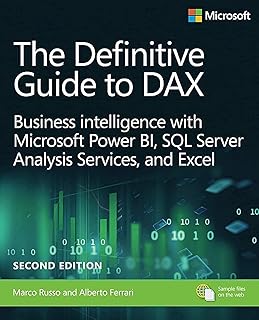
Definitive Guide to DAX cover

The Definitive Guide to DAX: Business Intelligence for Microsoft Power BI, SQL Server Analysis Services, and Excel

Site Owners from SQLServerCentral

Now expanded and updated with modern best practices, this is the most complete guide to Microsoft’s DAX language for business intelligence, data modeling, and analytics. Expert Microsoft BI consultants Marco Russo and Alberto Ferrari help you master everything from table functions through advanced code and model optimization.


 Question of the Day

Today's question (by Steve Jones - SSC Editor):


The Empty Aggregate

I have this table in a SQL Server 2025 database:
CREATE TABLE [dbo].[CustomerOrder]
(
[OrderID] [int] NULL,
[CustomerID] [int] NULL,
[total] [money] NULL
) ON [PRIMARY]
GO
What is returned from this code? (answers are for the sum and then the count)
SELECT SUM(total) AS sum,
       COUNT(total) AS count
FROM dbo.CustomerOrder;


Think you know the answer? Click here, and find out if you are right.


 Yesterday's Question of the Day (by Steve Jones - SSC Editor)

RegEx Functions IV

I have this data in a table in a SQL Server 2025 database:

EmailAddressID EmailAddress
7              dylan0@ADVENTURE-WORKS.COM
8              Diane1@ADVENTURE-WORKS.COM

If I run this query, which row(s) are returned?

SELECT top 10
 *
 FROM person.EmailAddress
 WHERE REGEXP_LIKE(EmailAddress, '^D', 'i')
 AND BusinessEntityID IN (7,8)

Answer: 2 - both rows match

Explanation: This matches both rows. The third parameter specifies options and the "i" option makes this a case insensitive match. Ref: REGEXP_LIKE() - https://learn.microsoft.com/en-us/sql/t-sql/functions/regexp-like-transact-sql?view=sql-server-ver17

Discuss this question and answer on the forums


Database Pros Who Need Your Help

Here's a few of the new posts today on the forums. To see more, visit the forums.


Editorials
You Need a DBA Pipeline - Comments posted to this topic are about the item You Need a DBA Pipeline
Designing for Teams - Comments posted to this topic are about the item Designing for Teams
Absolute and Relative References - Comments posted to this topic are about the item Absolute and Relative References
Get Along - Comments posted to this topic are about the item Get Along
Finely Tuned Models - Comments posted to this topic are about the item Finely Tuned Models
Older Versions of SQL (v6.5, v6.0, v4.2)
Looking for old SQL Server 1.x - 4.21 disks, manuals, boxes, etc. - Hi everyone, I'm hoping some of the longtime SQL Server professionals here might be able to help me with something. I've been doing a lot of research into the earliest versions of SQL Server for SQL.FM, a SQL Server version and feature reference site I maintain, and as part of this effort I've also started […]
Article Discussions by Author
Adding new column with DEFAULT II - Comments posted to this topic are about the item Adding new column with DEFAULT II
Advanced Deployment Scenarios: Stairway to Reliable Database Deployments Level 7 - Comments posted to this topic are about the item Advanced Deployment Scenarios: Stairway to Reliable Database Deployments Level 7
SQL Server Automated Backup & SAN Replication Solution - Comments posted to this topic are about the item SQL Server Automated Backup & SAN Replication Solution
Checking the Error Log II - Comments posted to this topic are about the item Checking the Error Log II
Parameter Sniffing on SQL Server 2025: A Walkthrough with Real Numbers - Comments posted to this topic are about the item Parameter Sniffing on SQL Server 2025: A Walkthrough with Real Numbers
Moving Beyond the Reboot: Finding the Culprit Behind Memory Pressure - Comments posted to this topic are about the item Moving Beyond the Reboot: Finding the Culprit Behind Memory Pressure
Reserved Words I - Comments posted to this topic are about the item Reserved Words I
RegEx Functions III - Comments posted to this topic are about the item RegEx Functions III
Optimized Locking in SQL Server 2025: Fewer Locks, Less Blocking, and the Cases It Cannot Fix - Comments posted to this topic are about the item Optimized Locking in SQL Server 2025: Fewer Locks, Less Blocking, and the Cases It Cannot Fix


RSS FeedTwitter

This email has been sent to {email}. To be removed from this list, please click here. If you have any problems leaving the list, please contact the webmaster@sqlservercentral.com. This newsletter was sent to you because you signed up at SQLServerCentral.com.
©2019 Redgate Software Ltd, Newnham House, Cambridge Business Park, Cambridge, CB4 0WZ, United Kingdom. All rights reserved.
webmaster@sqlservercentral.com


- - - - - - - - - - - - - - - - - - - - - - - - - - - - - - - - -