Problems displaying this newsletter? View online.
SQL Server Central
Featured Contents
Question of the Day
 
The Voice of the DBA
 

You Need a DBA Pipeline

I work regularly with a number of customers on improving their database change processes. This has been the goal of Redgate's Database Change Management over the years, helping database systems work more like application software with DevOps principles. The idea is to move quicker and respond better to demands, while providing safety and governance. A database is a stateful machine, which is a challenge to evolve and maintain, but with good data modeling, testing, code analysis, and automation, your database change process can coexist with your application software.

That being said, most of the solutions for managing database change focus on the database itself and everything inside it. After all, that's where the data is. I understand people wanting to solve that problem, but there are plenty of things that need to be managed for a database server (or an instance for MSSQL) outside of the database. We have security, configuration, and, in the case of SQL Server, jobs. That might be the number one request is a way to manage jobs across systems.

Regardless of any tooling you might use, the important thing that you need is a way to easily manage and deploy the scripts you generate. These might be adding users or logins, perhaps rotating certificates, or something else. Clicking through SSMS or manually running things might seem like it's quick, but that's a governed way to manage tasks. You might update a Jira ticket when you're done, but do you always capture the code you ran in the ticket? The results?

For many tasks, this might not seem like it matters. If we make a mistake, we correct it, and no one needs to know. However, this doesn't help you work more efficiently, nor does it help your team work closer together. If there are records of the code and results in a pipeline, then you have a trail of who, what, when, and how. The ticket should tell you why.

This helps hold you accountable. It ensures you test more carefully. It gives teammates a place to go grab a script that worked and re-run it, perhaps changing the name of something in the script; this allows the reuse of work. This ensures that the work is routine.

Many of us have made a career out of doing work manually, and we've gotten good at it. However, the future will require us to work in a team, one that may include an AI, and learning to build patterns of work that flow easily across humans and agents will be a skill that lets us both be productive and provide value to our employers.

Steve Jones - SSC Editor

Join the debate, and respond to today's editorial on the forums


 Featured Contents
Stairway icons Database Deployments

Advanced Deployment Scenarios: Stairway to Reliable Database Deployments Level 7

Massimo Preitano from SQLServerCentral

This final level focuses on the practical application of changesets in complex scenarios. From table transformations to ETL-driven logic, it explores how to manage database changes when rollback is no longer purely structural, emphasizing control, predictability, and pragmatic solutions.

External Article

Database Animations: Stop Using Page Splits to Justify Lowering Fill Factor.

Additional Articles from Brent Ozar Blog

You're looking at page split numbers in a monitoring tool or Perfmon, and you've heard that page splits are bad, so you're lowering fill factor, expecting your page splits to go down.

Technical Article

Take the 2027 State of the Database Landscape Survey

Press Release from SQLServerCentral

Share your view on the database landscape and you could win USD$500.

Blog Post

From the SQL Server Central Blogs - Tell It Once: Setting Up Claude With Skills and MCP Servers

Jeff Taylor from Jeff Taylor

Many of us use AI the same way every single day. Open a tab. Paste in a question. Copy the answer out. Fix what it got wrong. Then tomorrow,...

Blog Post

From the SQL Server Central Blogs - SQL Server Transaction Log Forensics: Preserving Evidence During an Incident

SQLPals from Mission: SQL Homeostasis

SQL Server Transaction Log Forensics: Preserving Evidence During an Incident

SQL Server Transaction Log Forensics: Preserving Evidence During an Incident

This is the companion to Why sys.fn_dblog...

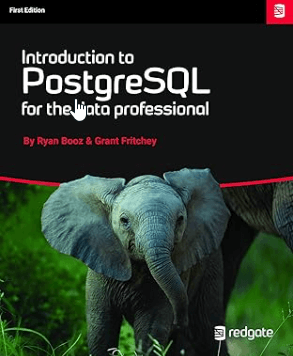
Introduction to PostgreSQL for the data professional

Introduction to PostgreSQL for the data professional

Site Owners from SQLServerCentral

Adoption and use of PostgreSQL is growing all the time. From mom-and-pop shops to large enterprises, more data is being managed by PostgreSQL. In turn, this means that more data professionals need to learn PostgreSQL even when they have experience with other databases. While the documentation around PostgreSQL is detailed and technically rich, finding a simple, clear path to learning what it is, what it does, and how to use it can be challenging. This book seeks to help with that challenge.


 Question of the Day

Today's question (by Thomas Franz):


Adding new column with DEFAULT II

Which number did the two COUNT(*) return:
DROP TABLE IF EXISTS #tmp
CREATE TABLE #tmp (id INT NOT NULL)

INSERT INTO #tmp (id) 
SELECT gs.value
  FROM GENERATE_SERIES(1, 5) AS gs

ALTER TABLE #tmp ADD my_value INT NOT NULL CONSTRAINT df_tmp_my_value DEFAULT 1

SELECT COUNT(*)  FROM #tmp AS t WHERE my_value = 1

ALTER TABLE #tmp DROP CONSTRAINT df_tmp_my_value

ALTER TABLE #tmp ADD CONSTRAINT df_tmp_my_value DEFAULT 2 FOR my_value

SELECT COUNT(*)  FROM #tmp AS t WHERE my_value = 1

Think you know the answer? Click here, and find out if you are right.


 Yesterday's Question of the Day (by Steve Jones - SSC Editor)

Checking the Error Log II

What is the reason I should change my old code that uses xp_readerrorlog?

Answer: Yes, because xp_readerrorlog isn't documented or supported.

Explanation: sp_readerrorlog is documented and supported. xp_readerrolog has never been documented or supported. The extended stored procedures that are documented as listed under General extended stored procedures. The parameters are mostly the same, so this is an easy change. There are also permissions checks with sp_readerrorlog to verify securityadmin/sysadmin roles. However, if you search on dates, then you might not be able to easily switch. Same if you expect asc/desc sort orders. Ref: sys.sp_readerrorlog - https://learn.microsoft.com/en-us/sql/relational-databases/system-stored-procedures/sp-readerrorlog-transact-sql?view=sql-server-ver17

Discuss this question and answer on the forums


Database Pros Who Need Your Help

Here's a few of the new posts today on the forums. To see more, visit the forums.


SQL Server 2019 - Development
Querying Multiple Tables for the Same Information - I have about 100 Tables that are all suffixed with _Modify. These tables record changes made to these 100 tables. Each of these tables may or may not contain a column called 'User' to record the userid  of who made the change. I can get the names of all the tables with the following query: […]
General
does anyone used https://github.com/ktaranov/sqlserver-kit - Could you please let me know if anyone is used https://github.com/ktaranov/sqlserver-kit github for deployment if yes, how it helped, please help me out to utilize this git. thank you in advance.
Editorials
Get Along - Comments posted to this topic are about the item Get Along
Finely Tuned Models - Comments posted to this topic are about the item Finely Tuned Models
Make It Routine - Comments posted to this topic are about the item Make It Routine
When And How to Automate? - Comments posted to this topic are about the item When And How to Automate?
Your Favorite Quotes - Comments posted to this topic are about the item Your Favorite Quotes
Article Discussions by Author
Moving Beyond the Reboot: Finding the Culprit Behind Memory Pressure - Comments posted to this topic are about the item Moving Beyond the Reboot: Finding the Culprit Behind Memory Pressure
Reserved Words I - Comments posted to this topic are about the item Reserved Words I
RegEx Functions III - Comments posted to this topic are about the item RegEx Functions III
Optimized Locking in SQL Server 2025: Fewer Locks, Less Blocking, and the Cases It Cannot Fix - Comments posted to this topic are about the item Optimized Locking in SQL Server 2025: Fewer Locks, Less Blocking, and the Cases It Cannot Fix
Finding Gaps in Sequential Data Using SQL Server - Comments posted to this topic are about the item Finding Gaps in Sequential Data Using SQL Server
Negative and Positive Numbers - Comments posted to this topic are about the item Negative and Positive Numbers
Hyperscale Replicas II - Comments posted to this topic are about the item Hyperscale Replicas II
Practical Reporting Queries with CROSS APPLY (Part 3) - Comments posted to this topic are about the item Practical Reporting Queries with CROSS APPLY (Part 3)


RSS FeedTwitter

This email has been sent to {email}. To be removed from this list, please click here. If you have any problems leaving the list, please contact the webmaster@sqlservercentral.com. This newsletter was sent to you because you signed up at SQLServerCentral.com.
©2019 Redgate Software Ltd, Newnham House, Cambridge Business Park, Cambridge, CB4 0WZ, United Kingdom. All rights reserved.
webmaster@sqlservercentral.com


- - - - - - - - - - - - - - - - - - - - - - - - - - - - - - - - -