Problems displaying this newsletter? View online.
SQL Server Central
Featured Contents
Question of the Day
 
The Voice of the DBA
 

Finely Tuned Models

I have no idea if this is true, but this post on X says that Thomson Reuters used information they've collected for decades to fine tune and train a model. They started with one of the qwen models and then spent $40 million to add their knowledge to the model. The post says this model is comparable to the Gpt5.5 and Sonnet 5 models. They have used 10% of their data, which spans over 100 years.

I have many questions. But first, $40mm? How many tokens is USD$40mm? A quick calculation is trillions of tokens, and while I'm sure there is some payback if lots of their customers use the model for work, there's also a compute cost every time they use the model. Perhaps they can fine-tune and train the model more efficiently over time, but I can't see many individual companies spending this effort on training their own model.

I also wonder what the time it took to train this. The story notes 2 years, but if I want to update this, then how much more effort. What's the cost? This certainly reduces the dependence on the frontier models from Antropic/OpenAI/etc., but is this something that makes sense for other companies? If I choose to use the TR model, would it be cheaper than Sonnet 5? Maybe it uses less power, which is always good, but will T-R charge me less than Anthropic?

I do think that fine-tuned models might make sense, especially if you can use a small language model and train it for a reasonable cost. Like $100,000, not millions. In that case, would it make sense to you? Would your company fund this themselves? Is this something that a trade group could do with support from multiple organizations? Or is the competition between companies so high that they can't work together?

I do think that AI has a lot of possibilities to assist humans, and focused models can be useful to solve specific problems, with a lot less cost than the best frontier models. I'm just not sure if the training effort is something that many are willing to put forth. It will be interesting to see how GenAI models evolve as the costs and resources needed by the frontier models continue to rise and smaller models become more capable.

Steve Jones - SSC Editor

Join the debate, and respond to today's editorial on the forums


 Featured Contents
SQLServerCentral Article

Optimized Locking in SQL Server 2025: Fewer Locks, Less Blocking, and the Cases It Cannot Fix

vgupta from SQLServerCentral

Reproduce traditional row-lock accumulation and writer blocking, then see how SQL Server 2025 uses transaction ID locking and Lock After Qualification to improve concurrency—and where hints, isolation levels, and query shapes limit the benefit.

Technical Article

Database Animations: The Interview Question Everybody Gets Wrong

Additional Articles from SQLServerCentral

No no, I'm not just talking about the people answering the interview question. I'm talking about the people asking the question.

Blog Post

From the SQL Server Central Blogs - Part 3 of 3: Tuning DiskANN — R, Alpha, L, Beam Width, Recall and Latency

Diligentdba 46159 from Mala's Data Blog

In Part 1, we saw how ‘Vamana’ represents vectors as nodes, connects them with edges, and uses greedy graph traversal to avoid comparing a query against every vector in...

Blog Post

From the SQL Server Central Blogs - PostgreSQL Support in the Data API Builder

Steve Jones - SSC Editor from The Voice of the DBA

Next week I’m at VS Live in San Diego (register and join me) and one of my talks is on the Data API Builder. I want to show how...

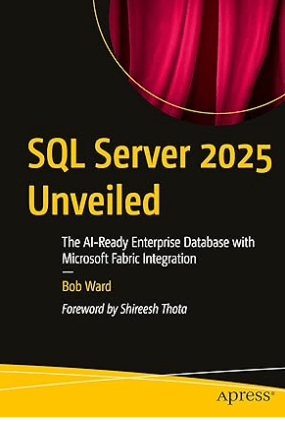
SQL Server 2025 Unveiled: The AI-Ready Enterprise Database with Microsoft Fabric Integration

SQL Server 2025 Unveiled: The AI-Ready Enterprise Database with Microsoft Fabric Integration

Site Owners from SQLServerCentral

With built-in AI for application development and advanced analytics powered by Microsoft Fabric, SQL Server 2025 empowers you to innovate—securely and confidently. This book shows you how.


 Question of the Day

Today's question (by Steve Jones - SSC Editor):


RegEx Functions III

If I run the REGEXP_LIKE() function, does it match values in a case-sensitive fashion, or a case-insensitive fashion by default.

Think you know the answer? Click here, and find out if you are right.


 Yesterday's Question of the Day (by Steve Jones - SSC Editor)

Negative and Positive Numbers

If I want to know whether a number of negative, positive, or zero, what is the easiest way to get this in T-SQL?

Answer: Use the SIGN() function

Explanation: The easiest way is to use the SIGN function. This returns a 1 for positive numbers, -1 for negative numbers, and 0 for zero. Ref: SIGN - https://learn.microsoft.com/en-us/sql/t-sql/functions/sign-transact-sql?view=sql-server-ver17

Discuss this question and answer on the forums


Database Pros Who Need Your Help

Here's a few of the new posts today on the forums. To see more, visit the forums.


SQL Server 2019 - Administration
Having some performance issues with linked server query - When I run my query from DW, which uses a linked server, it times out. I then take that query, run directly on a linked server with select top 1 and it takes 85 minutes. Now I restore the linked server DB in test. I run the same query from test DW and it takes […]
Editorials
Your Favorite Quotes - Comments posted to this topic are about the item Your Favorite Quotes
AI Experience Gap that we keep talking about - Comments posted to this topic are about the item AI Experience Gap that we keep talking about
I Don't Want To Do XX - Comments posted to this topic are about the item I Don't Want To Do XX
Article Discussions by Author
Hyperscale Replicas II - Comments posted to this topic are about the item Hyperscale Replicas II
Practical Reporting Queries with CROSS APPLY (Part 3) - Comments posted to this topic are about the item Practical Reporting Queries with CROSS APPLY (Part 3)
Implementing Type 4 Slowly Changing Dimensions in SQL Server - Comments posted to this topic are about the item Implementing Type 4 Slowly Changing Dimensions in SQL Server
The Disabled Index - Comments posted to this topic are about the item The Disabled Index
Server-Level Table sizes - Comments posted to this topic are about the item Server-Level Table sizes
ORDER BY alias - Comments posted to this topic are about the item ORDER BY alias
Optional Parameter Plan Optimization in SQL Server 2025: Fixing the Kitchen-Sink Search Procedure - Comments posted to this topic are about the item Optional Parameter Plan Optimization in SQL Server 2025: Fixing the Kitchen-Sink Search Procedure
Squared Values - Comments posted to this topic are about the item Squared Values
Managing Feature Flags with GET_BIT() and SET_BIT() in SQL Server - Comments posted to this topic are about the item Managing Feature Flags with GET_BIT() and SET_BIT() in SQL Server
Stored Procedures for Server-Level Object and Column Search - Comments posted to this topic are about the item Stored Procedures for Server-Level Object and Column Search
Databricks Genie Spaces for SQL Analysts: Natural Language Querying Without Leaving Your Data Platform - Comments posted to this topic are about the item Databricks Genie Spaces for SQL Analysts: Natural Language Querying Without Leaving Your Data Platform


RSS FeedTwitter

This email has been sent to {email}. To be removed from this list, please click here. If you have any problems leaving the list, please contact the webmaster@sqlservercentral.com. This newsletter was sent to you because you signed up at SQLServerCentral.com.
©2019 Redgate Software Ltd, Newnham House, Cambridge Business Park, Cambridge, CB4 0WZ, United Kingdom. All rights reserved.
webmaster@sqlservercentral.com


- - - - - - - - - - - - - - - - - - - - - - - - - - - - - - - - -